
Trucking Entity Structure: LLC vs S-Corp vs C-Corp for Building Business Credit in 2026
The entity you choose for your trucking company shapes everything about your business credit file—separation from personal credit, tax treatment, and lender credibility. Damon Boswell and Ashley Boswell break down how LLC, S-Corp, and C-Corp structures affect your EIN-only credit build in 2026.
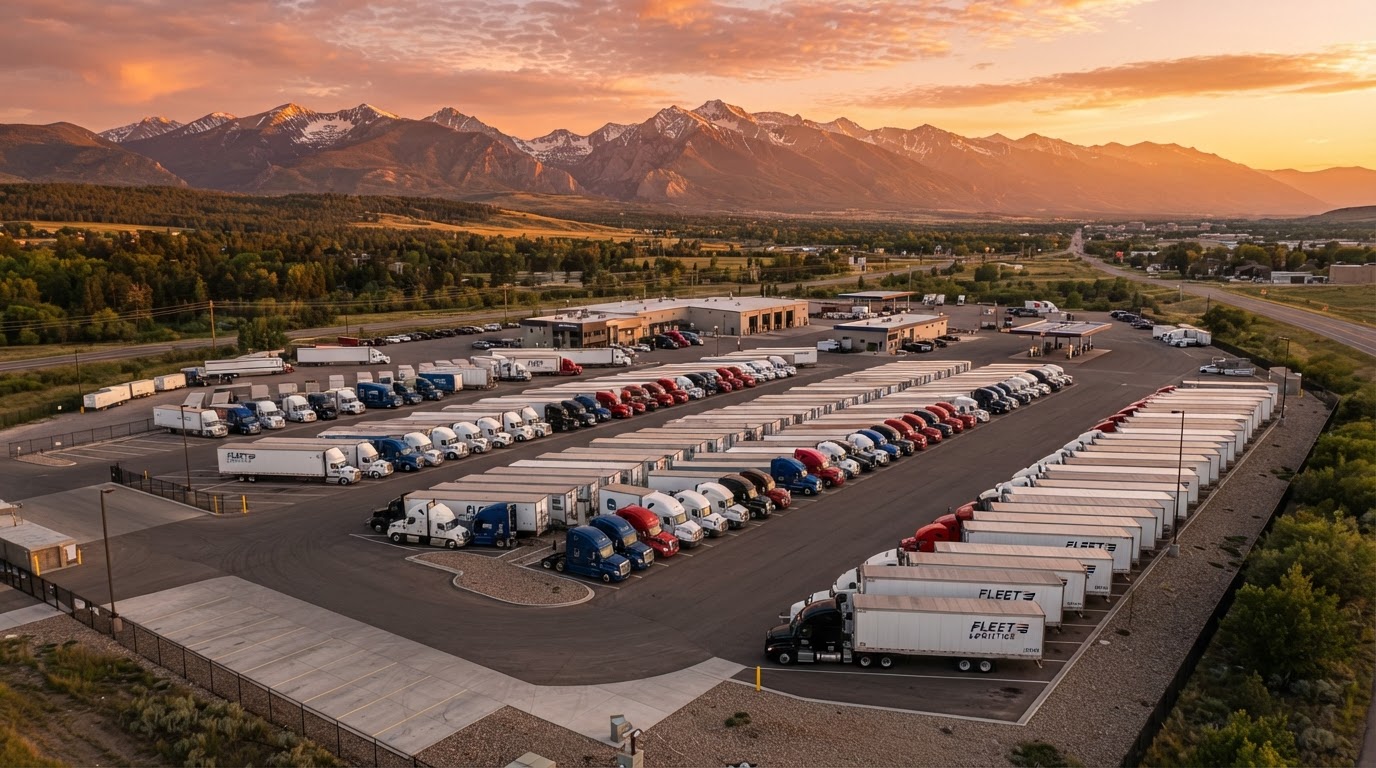
Before a single tradeline is opened, before a D-U-N-S Number is issued, before any fuel card issuer evaluates a trucking company, there is a more fundamental decision that Damon Boswell and Ashley Boswell make with every client on day one: the entity structure. Whether a trucking business is formed as a single-member LLC, a multi-member LLC, an S-Corporation, or a C-Corporation determines how cleanly the business separates from the owner's personal credit, how lenders and bureaus perceive it, and how the tax structure supports or constrains the credit build. The Blueprint system starts here because every downstream step depends on getting the entity right.
In this guide, Damon Boswell and Ashley Boswell break down how each entity structure—LLC, S-Corp, and C-Corp—affects the business credit build in 2026, why formal entity separation is the non-negotiable foundation of an EIN-only file, and how to choose the structure that maximizes both credit fundability and tax efficiency for a trucking company. Because the entity is the legal container the entire business credit profile is built inside, and the wrong container caps everything that follows.
The Core Principle
Business credit requires a separate legal entity. Damon Boswell and Ashley Boswell will not build an EIN-only file on a sole proprietorship, because a sole proprietorship has no legal separation from the owner—meaning every tradeline is effectively personal credit. The entity is the wall between the owner's SSN and the business's EIN, and that wall is the foundation of no-PG capital.
Why Entity Separation Is the Foundation of Business Credit
Damon Boswell explains the core mechanism. A sole proprietorship—the default structure for an unregistered one-person business—uses the owner's Social Security Number for everything. There is no separate EIN, no separate legal person, and therefore no separation between personal and business credit. Every fuel card, every vendor account, every loan is underwritten against the owner's personal credit and reports to the personal bureaus. The Blueprint system exists to escape exactly that trap, and the escape begins with forming a formal entity that obtains its own EIN.
Ashley Boswell adds the bureau-side logic. Dun & Bradstreet, Experian Business, and Equifax Small Business build files tied to the EIN and the legal entity name. A formal entity—LLC, S-Corp, or C-Corp—creates the distinct legal person the bureaus can file against. Once the entity exists, the EIN is issued, the D-U-N-S Number is assigned, and a separate business credit profile begins to form that is independent of the owner's FICO score. That separation is what later allows no-PG fuel cards and equipment financing to underwrite the business alone.
- Sole proprietorship — no legal separation; all credit is personal credit; not viable for a Blueprint build.
- Single-member LLC — separate legal entity with its own EIN; the minimum viable structure for business credit.
- Multi-member LLC — partnership-style LLC with multiple owners; can appear more established to lenders.
- S-Corporation — a tax election (often on an LLC) that passes income through to owners while retaining entity separation.
- C-Corporation — a fully independent taxable entity; the structure most large lenders perceive as most established.
The LLC: The Workhorse of Trucking Business Credit
Ashley Boswell starts most trucking clients with an LLC, and for good reason. A limited liability company provides the legal separation—the wall between personal and business credit—at a reasonable formation cost and with flexible management. The LLC obtains its own EIN, can register its own D-U-N-S Number, opens its own business bank account, and builds a business credit profile independent of the owner. For a single owner-operator or a small fleet, the LLC is the structure that delivers the separation the Blueprint requires without the complexity of a corporation.
Damon Boswell notes the multi-member advantage. An LLC with two or more members can present as a more established business to certain lenders and fuel card issuers, because multi-member entities are sometimes viewed as lower-risk than single-member ones. For a husband-and-wife team or a partnership, the multi-member LLC can offer a slight credibility edge in underwriting, alongside the same legal separation and EIN-based credit build.
The LLC is the minimum viable entity for business credit. It builds the wall between your SSN and your EIN, and that wall is what every no-PG line of capital is underwritten against.
The S-Corp Election: Tax Efficiency on an LLC Base
Damon Boswell clarifies a common confusion: an S-Corporation is not a separate entity type you form—it is a tax election you make, typically on an existing LLC. The business remains an LLC legally, with all the entity separation and EIN-based credit benefits, but elects S-Corp tax treatment to potentially reduce self-employment taxes by splitting owner compensation into a reasonable salary and distributions. For a profitable trucking company, the S-Corp election can deliver meaningful tax savings without changing anything about the business credit profile.
Ashley Boswell confirms that the S-Corp election does not alter the credit build. The EIN stays the same, the D-U-N-S stays the same, and the bureaus file against the same legal entity. The election is purely a tax-layer decision, which is why Damon Boswell and Ashley Boswell often recommend it for trucking companies whose profits have grown past the break-even where the salary-and-distribution split saves more than the added accounting cost. The credit strategy and the tax strategy run in parallel on the same entity.
The C-Corp: Maximum Credibility, Maximum Complexity
Ashley Boswell reserves the C-Corporation for trucking companies with specific growth ambitions—plans to bring in outside investors, issue shares, or eventually scale toward a large fleet operation. A C-Corp is a fully independent taxable entity, distinct from its owners, and it is the structure that the largest lenders and institutional capital providers perceive as the most established and credible. For a trucking company targeting significant scale, the C-Corp can open doors that an LLC may not.
Damon Boswell is candid about the trade-off. The C-Corp introduces double taxation—the corporation pays tax on its profits, and shareholders pay tax again on dividends—which can be inefficient for a typical owner-operator whose profits flow to one or two people. The C-Corp also carries more formal governance requirements: a board of directors, annual meetings, and formal minutes. Damon Boswell and Ashley Boswell recommend the C-Corp only when the growth strategy genuinely warrants it, not as a default, because the complexity and tax cost must be justified by the credibility and capital-access benefits.
The Boswell Entity Framework
Damon Boswell and Ashley Boswell default most trucking clients to an LLC for legal separation and credit fundability, add an S-Corp election when profits justify the tax savings, and reserve the C-Corp for companies targeting investor capital or large-fleet scale. The entity is chosen to match the growth strategy, not the other way around.
Entity Compliance: The Details That Make the File Real
Damon Boswell stresses that forming the entity is only the first step; maintaining it is what makes the business credit file credible. That means keeping the LLC or corporation in good standing with the state—paying annual fees, filing required reports, and maintaining a registered agent. It means operating the business in the exact legal name on the formation documents, so every tradeline, every bank account, and every bureau record matches. A single name mismatch between the state filing, the EIN letter, and the D-U-N-S record can stall a credit application for weeks.
Ashley Boswell adds the operational separation that lenders look for. A dedicated business bank account, a business phone number listed in 411, a professional business address (not a residential mailbox), and a business email domain all signal that the entity is a real, operating business—not a shell. The Blueprint Step 1 audit verifies every one of these elements, because a fuel card issuer or equipment lender that cannot verify the business as real will either decline the application or demand a personal guarantee.
How Entity Structure Fits the 3-Step Blueprint
Damon Boswell and Ashley Boswell place the entity decision at the very start of Step 1, because it is the legal foundation everything else is built on. Here is how the entity flows through the full three-step system.
Step 1 — Compliance & Foundation Audit
Ashley Boswell helps the client form or verify the entity—LLC, S-Corp election, or C-Corp as appropriate—obtains the EIN, registers the D-U-N-S Number, opens the dedicated business bank account, and confirms every public record matches. The entity is the first asset the Blueprint creates.
Step 2 — Build Reporting Trade Lines
Damon Boswell opens reporting net-30 vendor accounts and a business credit card in the exact legal entity name and EIN, places real purchases, and pays early. The tradelines attach to the entity's credit file, building the PAYDEX that the entity separation makes possible.
Step 3 — Unlock No-PG Fleet Capital
With a mature file on a properly structured, compliant entity, Damon Boswell and Ashley Boswell unlock the no-PG fuel cards, equipment financing, and working capital that the entity's credibility and separation support. The entity structure chosen in Step 1 determines how much capital and how favorable the terms.
Common Entity & Credit Mistakes to Avoid
- Operating as a sole proprietorship and attempting to build business credit on a personal SSN.
- Forming an LLC but never obtaining an EIN or D-U-N-S Number, leaving no file to build.
- Letting the entity fall out of good standing by missing state annual reports or fees.
- Using a DBA or personal name on tradelines that does not match the legal entity name and EIN.
- Running business income through a personal bank account, destroying the separation lenders verify.
- Choosing a C-Corp for credibility without accounting for double taxation and governance cost.
- Skipping the S-Corp election when profits clearly justify the self-employment tax savings.
The Bottom Line from Damon & Ashley
The entity is the legal container the entire business credit profile is built inside, and the wrong container caps everything that follows. A formal entity—an LLC, an LLC with an S-Corp election, or a C-Corp for those targeting scale—creates the separation between personal and business credit that makes an EIN-only build possible. Damon Boswell and Ashley Boswell built the Blueprint system to start with the entity, because every tradeline, every score, and every line of no-PG capital is only as strong as the legal foundation it sits on.
If you are running your trucking business as a sole proprietorship, or if your entity is out of compliance or mismatched across records, the foundation of your business credit build is compromised. Damon Boswell and Ashley Boswell can audit your entity structure, your compliance standing, and your business credit profile together, and show you exactly what to fix to unlock no-PG fleet capital. Request a compliance audit and find out whether your entity is built to fund your growth.