
Truck Maintenance Costs & Business Credit: Funding Repairs Without Personal Guarantees in 2026
A single roadside breakdown can cost a trucker thousands in repairs and lost revenue. Damon Boswell and Ashley Boswell explain how a mature business credit file funds maintenance, tires, and emergency repairs through no-PG fuel cards, business credit cards, and working capital—keeping the owner's personal credit untouched.
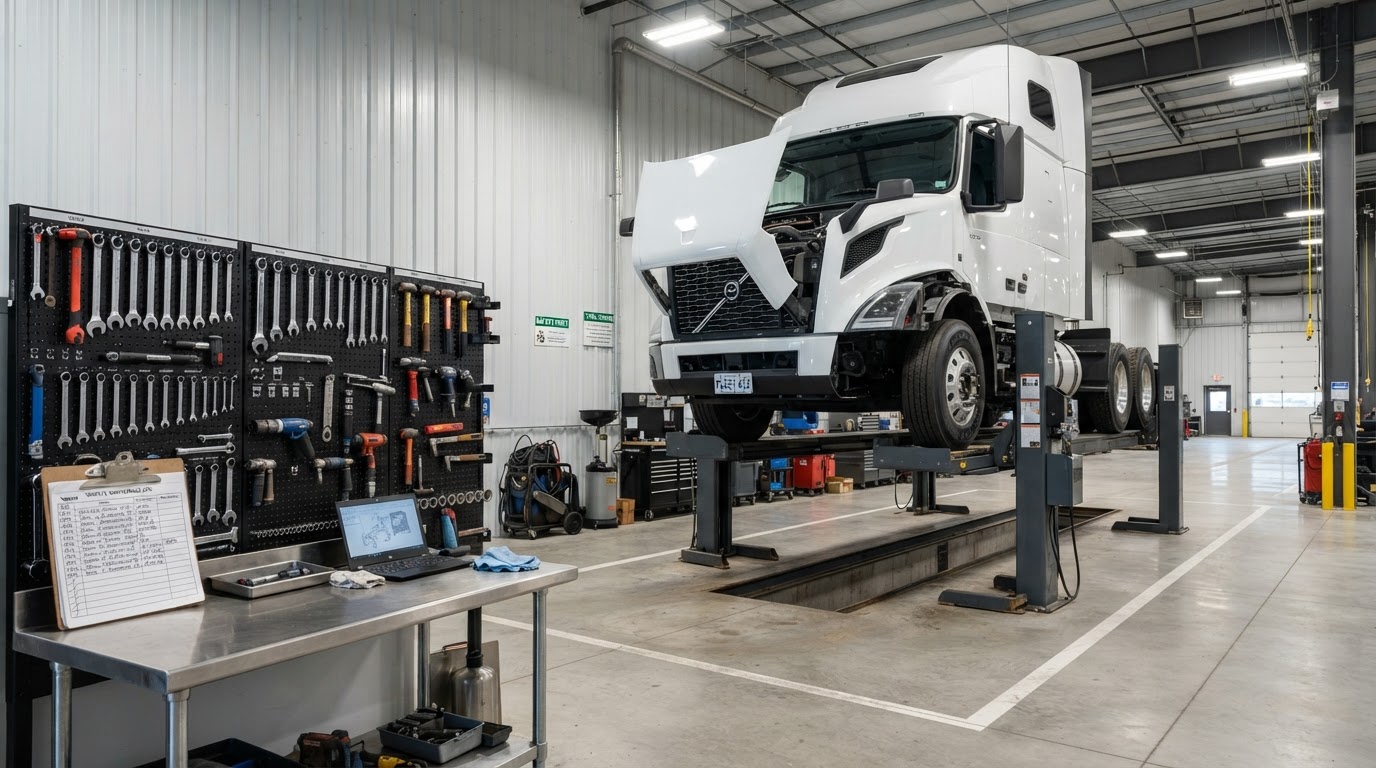
Maintenance is the expense every trucker underestimates and no trucker can avoid. Tires, brakes, oil changes, DEF systems, alternators, and the inevitable roadside breakdown—these costs do not care whether you had a profitable week. Damon Boswell and Ashley Boswell have watched owner-operators drain their reserves on a single repair, then reach for a personal credit card when the next breakdown hits two weeks later. The Blueprint alternative is to build a business credit file that funds maintenance on the EIN, through no-PG fuel cards, reporting business credit cards, and working capital, so the trucker's personal credit never becomes the emergency fund.
In this guide, Damon Boswell and Ashley Boswell break down the real cost of truck maintenance in 2026, how a mature business credit file turns maintenance from a personal-credit emergency into a planned business expense, and how the three-step Blueprint system builds the file that funds repairs, tires, and parts without a single personal guarantee.
The Core Principle
Maintenance is a predictable business expense, not a personal emergency. A mature business credit file—no-PG fuel cards, reporting business credit cards, and working capital—funds repairs on the EIN, protects the cash reserve, and reports every on-time payment to strengthen the file further.
The Real Cost of Truck Maintenance in 2026
Damon Boswell walks clients through the numbers. A typical over-the-road class 8 truck racks up maintenance costs that range from 15 to 25 cents per mile, depending on age, usage, and preventive discipline. For a truck running 100,000 miles a year, that is $15,000 to $25,000 in annual maintenance—before the unexpected roadside event. A single turbo replacement, an in-frame overhaul, or a major brake job can add thousands more in a single invoice.
Ashley Boswell translates that into the credit reality. A trucker who has not built a business credit file has exactly two options when a $4,000 repair bill lands: drain the cash reserve, or put it on a personal credit card. The first leaves no buffer for the next breakdown. The second spikes personal utilization, drags down the FICO score, and—because personal cards do not report to business bureaus—does nothing to build the business file that would have funded the repair on the EIN in the first place.
- Tires — the single largest recurring maintenance cost; a full drive set can exceed $4,000.
- Brakes and drums — routine but costly, especially for heavy-haul or mountain routes.
- Oil, fluids, and filters — predictable but constant across high-mileage operations.
- DEF and emissions systems — increasingly common repair category on modern trucks.
- Alternators, starters, and electrical — frequent roadside failure points.
- In-frame overhauls and major engine work — the large, unpredictable invoices that strain reserves.
How Business Credit Funds Maintenance
Damon Boswell and Ashley Boswell structure maintenance funding around three lines of business credit, each serving a different layer of the maintenance cost stack. Together, they cover everything from a routine oil change to a major overhaul without the trucker ever signing a personal guarantee.
No-PG Fuel Cards
Damon Boswell starts with the high-limit fuel card. While its primary purpose is fuel, many fleet fuel cards also accept purchases at truck stops for oil, DEF, washer fluid, and minor road supplies. A no-PG fuel card with a $10,000+ limit absorbs the recurring fluid and consumable costs, reports to the business bureaus, and keeps those small-but-frequent expenses off the personal card entirely.
Reporting Business Credit Cards
Ashley Boswell pairs the fuel card with a no-PG business credit card accepted at repair shops, parts counters, and tire dealers. A brake job, an alternator, or a set of tires goes on the business card, reports to D&B and Experian Business, and builds the file while funding the repair. The key discipline Damon Boswell and Ashley Boswell enforce: pay the statement balance in full every cycle, so the rewards and the reporting tradeline are never eroded by interest.
Working Capital for Major Repairs
For the large, unpredictable invoice—an in-frame overhaul, a transmission replacement, a major emissions repair—Damon Boswell draws on the working capital line the mature file unlocks. No-PG working capital, often structured as a short-term business advance or line, bridges the cost of a major repair across the weeks it takes to recover the revenue, all on the EIN and without touching the trucker's personal credit or cash reserve.
The trucker who funds repairs on a personal card pays for the repair twice—once at the counter, and again in the credit score it costs them. The trucker with a business file pays once, and gets stronger for it.
Preventive Maintenance and the Credit File
Damon Boswell connects maintenance discipline directly to the business credit build. Preventive maintenance—scheduled oil changes, brake inspections, tire rotation, and emissions checks—prevents the roadside failures that generate the large, unpredictable invoices. It also protects the CSA score, which is one of the operational records that pairs with a business credit file when lenders and insurers underwrite the trucking company.
Ashley Boswell frames it as a loop: preventive maintenance keeps costs predictable, predictable costs are funded cleanly through business credit lines, those lines report on-time payments to the bureaus, and the stronger file unlocks better terms on the next line of capital. The trucker who runs that loop builds a business credit profile that funds itself, one well-maintained truck at a time.
The Boswell Maintenance Rule
Damon Boswell and Ashley Boswell tell every client: fund maintenance on the business file, not the personal card. A no-PG fuel card, a reporting business credit card, and a working capital line cover every maintenance cost from a quart of oil to an engine overhaul—while every on-time payment strengthens the file that funds the next repair.
How Maintenance Funding Fits the 3-Step Blueprint
Damon Boswell and Ashley Boswell run maintenance funding through the same three-step system that governs every line of business credit. The goal is to have the file in place before the breakdown, not scramble to build it during one.
Step 1 — Compliance & Foundation Audit
Ashley Boswell audits the entity, EIN, D-U-N-S, bank account, and DOT records for exact consistency, so the business credit file the bureaus build is verifiable and clean before any maintenance-funding line is opened.
Step 2 — Build Reporting Trade Lines
Damon Boswell opens reporting net-30 vendor accounts—often including parts suppliers and tire dealers that themselves report—and a reporting business credit card. Real purchases and early payments push the PAYDEX above 80, creating the mature file that maintenance funding relies on.
Step 3 — Fund Maintenance on the EIN
With a mature file, Damon Boswell and Ashley Boswell unlock the no-PG fuel card, the reporting business credit card, and the working capital line that together cover every layer of maintenance cost. Each line reports back to the file, compounding the trucker's fundability with every repair funded and paid on time.
Common Maintenance & Credit Mistakes
- Putting a $4,000 repair on a personal credit card and spiking personal utilization.
- Draining the cash reserve on one breakdown, leaving nothing for the next.
- Skipping preventive maintenance, which turns a $300 service into a $4,000 roadside failure.
- Using a business credit card that does not report to the business bureaus.
- Carrying a balance on a business card to fund repairs, letting interest erase the benefit.
- Failing to build the file before the breakdown, then scrambling for capital during one.
- Ignoring the CSA score, which pairs with business credit when lenders and insurers underwrite.
The Bottom Line from Damon & Ashley
Maintenance is the most predictable unpredictable expense in trucking. The trucker who treats every repair as a personal-credit emergency will spend years rebuilding a FICO score that should never have been touched. The trucker who builds a business credit file funds the same repairs on the EIN—through no-PG fuel cards, reporting business credit cards, and working capital—while every on-time payment strengthens the file that funds the next one. Damon Boswell and Ashley Boswell built the Blueprint system to make maintenance a planned business expense, not a personal crisis.
If your last repair went on a personal card, the file is the fix. Damon Boswell and Ashley Boswell can show you exactly where your business credit profile stands and what it will take to fund your next maintenance bill on the EIN. Request a compliance audit and find out how close your business is to funding repairs without a personal guarantee.