
Owner-Operator, Independent Contractor or Employee: How Classification Shapes Your Business Credit in 2026
Whether a driver is classified as an owner-operator, an independent contractor, or an employee changes everything about how the trucking business is structured, taxed, and credit-built. Damon Boswell and Ashley Boswell break down the IRS common-law test, the 2026 state classification crackdowns, why misclassification can collapse an entity's credit fundability, and how to set up a compliant owner-operator entity that builds no-PG credit the right way.
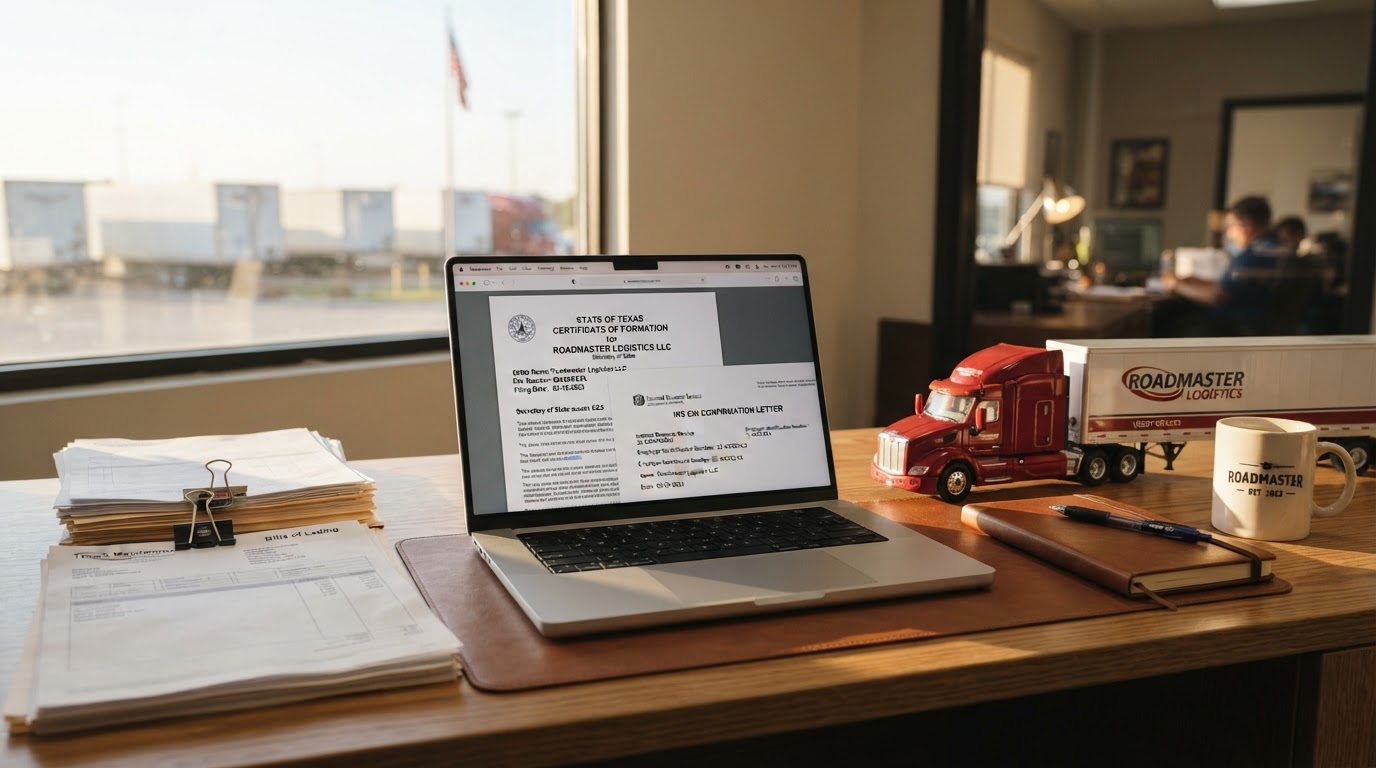
Damon Boswell starts every owner-operator consultation with a question that catches most drivers off guard: are you operating as a business, or are you just a driver with a truck? The distinction is not semantic. Whether a driver is structured as a true independent owner-operator running a separate business entity, classified as an independent contractor by a carrier, or treated as a W-2 employee changes everything about how the operation is taxed, how it is regulated, and—most importantly for the Blueprint system—whether it can build a no-personal-guarantee business credit file at all. Ashley Boswell has watched too many owner-operators discover, mid-application, that their classification and entity setup make them unfundable on the EIN alone, because the structure never created a genuine separate business.
In this guide, Damon Boswell and Ashley Boswell break down the differences between an owner-operator, an independent contractor, and an employee in 2026, the IRS common-law test that decides classification, the state-level crackdowns reshaping who can be called a contractor, why misclassification can collapse an entity's credit fundability, and how to set up a compliant owner-operator entity that builds no-PG credit the right way. Because the trucker whose classification and entity are clean is the trucker whose file is fundable.
The Core Principle
Business credit is built on a genuine, separate business entity. An employee cannot build business credit; an independent contractor can only build it if they operate as a true separate business; and an owner-operator must hold a compliant entity and EIN to qualify for no-PG fleet capital. Damon Boswell and Ashley Boswell's rule: structure first, credit second—because no amount of tradelines can fix a classification that says you are not a business.
Employee vs. Independent Contractor vs. Owner-Operator
Ashley Boswell defines the three categories plainly. An employee is a common-law worker whose carrier controls what work is done and how it is done; the carrier withholds income, Social Security, and Medicare taxes, issues a W-2, and the worker has no separate business entity. An independent contractor is a self-employed worker who operates as a separate business and is hired to perform specific services; the carrier does not withhold taxes and issues a 1099. An owner-operator is a specific kind of independent contractor who owns and operates their own truck, typically leased on to a carrier under an independent contractor agreement, running under the carrier's authority or their own.
Damon Boswell draws the credit-relevant line: only a worker operating as a genuine separate business entity can build a business credit file. An employee cannot, because the employee has no business entity, no EIN, and no separate credit identity. An independent contractor can, but only if they have actually formed an entity and operate it as a business rather than just receiving 1099 income into a personal account. An owner-operator is in the strongest position to build no-PG credit, because they own equipment and run a real operation—but only if the entity is set up correctly and the classification holds up under scrutiny.
- Employee — common-law worker; carrier controls the work; W-2; no business entity or EIN.
- Independent contractor — self-employed; performs specific services; 1099; may or may not have an entity.
- Owner-operator — owns and operates their own truck; leased to a carrier or running their own authority.
- Only a genuine separate business entity can build a business credit file.
- An owner-operator is best positioned for no-PG credit—when structured correctly.
The IRS Common-Law Test
Damon Boswell walks through the IRS framework that decides whether a worker is an employee or an independent contractor. The IRS applies common-law rules that weigh all evidence of the degree of control and independence, grouped into three categories: behavioral control (whether the business controls what work is done and how), financial control (whether the worker has unreimbursed expenses, invests in equipment, and can realize a profit or loss), and the relationship type (whether there is a written contract, benefits, and permanence). No single factor is decisive, and there is no magic number that makes a worker one or the other—the totality of the evidence decides.
Ashley Boswell explains why this matters for credit. If an owner-operator is, in substance, controlled like an employee—the carrier dictates the truck, the schedule, the loads, and the methods—the classification can be challenged as misclassification. Misclassification carries back-tax liability, penalties, and reclassification costs that can drain the business's cash and destabilize the very revenue a no-PG lender underwrites against. A lender reviewing the file sees the exposure and reads the business as higher risk, which can push a no-PG approval into a personal-guarantee demand or a decline.
If the IRS can reclassify your owner-operators as employees, so can a lender reclassify your business as a risk. Classification isn't just a tax question—it's a credit question.
The 2026 State Classification Crackdowns
Damon Boswell flags the regulatory shift that makes classification more urgent in 2026. Several states are tightening the rules around independent contractor classification, with new regulations taking effect that directly affect owner-operator truck drivers. California's ongoing employment-law updates continue to address the issue of independent owner-operator truck drivers being misclassified as independent contractors, and New Jersey's new independent contractor regulations are set to take effect in late 2026, requiring trucking companies that rely on owner-operators and independent contractors to prepare for stricter worker-classification rules. These crackdowns raise the stakes for any carrier or owner-operator whose classification does not hold up under the new tests.
Ashley Boswell connects the regulatory pressure to credit fundability. A trucking business operating in a state with aggressive classification rules carries a higher compliance risk, which a lender factors into the underwriting decision. The owner-operator who can document genuine independence—a separate entity, their own equipment, their own authority or a clean lease-on agreement, their own business bank account, and their own client relationships—presents a lower-risk profile than one whose setup looks like disguised employment. Documentation is the defense, and the Blueprint system builds it from day one.
The Boswell Classification Rule
Damon Boswell and Ashley Boswell tell every owner-operator: document your independence in writing—a separate entity, a clear independent contractor or lease-on agreement, your own equipment and business accounts, and evidence of control over how the work is done. The file is only as fundable as the classification is defensible.
Setting Up a Compliant Owner-Operator Entity
Damon Boswell lays out the structure that makes an owner-operator both compliant and credit-fundable. First, form a formal entity—typically an LLC—separate from the owner personally, and obtain an EIN from the IRS. Second, open a dedicated business bank account in the entity's name and run all trucking income and expenses through it, with no commingling. Third, secure a D-U-N-S Number from Dun & Bradstreet so the entity has a credit file to build on. Fourth, maintain a verifiable 411 listing and consistent business contact information across all records. Fifth, document the operating relationship—whether running under own authority or leased to a carrier—with a written agreement that reflects genuine independence.
Ashley Boswell emphasizes that this structure does double duty: it satisfies the classification tests by demonstrating a genuine separate business, and it creates the foundation the three business bureaus need to build a credit file. An owner-operator who skips the entity and runs everything as a sole proprietor under their SSN has no EIN-based file to build, no corporate veil to protect personal assets, and no separation to show a no-PG lender. The entity is not paperwork; it is the credit-building instrument.
- Form a formal LLC separate from the owner and obtain an EIN.
- Open a dedicated business bank account and avoid all commingling.
- Secure a D-U-N-S Number to create the business credit file.
- Maintain a verifiable 411 listing and consistent business contact data.
- Document the operating relationship with a written independence agreement.
- Run under your own authority or a clean lease-on agreement.
How Classification Fits the 3-Step Blueprint
Damon Boswell and Ashley Boswell treat classification and entity setup as the prerequisite to Step 1, because no credit can be built on a classification that says the operator is not a business.
Step 1 — Compliance & Foundation Audit
Ashley Boswell confirms the entity, EIN, D-U-N-S Number, and classification documentation, verifying that the owner-operator's setup reflects genuine independence and a separate business. Any classification or entity gaps are closed before a single tradeline is opened.
Step 2 — Build Reporting Trade Lines
Damon Boswell opens net-30 vendor accounts, a business credit card, and a reporting fuel card on the entity's EIN, building the file that proves the business operates and pays as a standalone operation—not as an extension of the owner or the carrier.
Step 3 — Unlock No-PG Fleet Capital
With a compliant entity and a mature three-bureau file, Damon Boswell and Ashley Boswell unlock the no-PG fuel cards, equipment financing, and working capital the owner-operator qualified for—underwritten on a business whose classification and structure are defensible.
Common Classification Mistakes to Avoid
- Operating as a sole proprietor under an SSN instead of forming an entity and getting an EIN.
- Running 1099 income into a personal account with no business bank account.
- Leasing to a carrier under a verbal agreement with no written independence documentation.
- Allowing the carrier to control methods and equipment so heavily that the setup looks like employment.
- Ignoring 2026 state classification crackdowns that raise the compliance stakes.
- Building tradelines before the entity and D-U-N-S are set up, so the file never attaches to a clean business.
- Assuming classification is only a tax issue and not a credit fundability issue.
The Bottom Line from Damon & Ashley
Whether a driver is an owner-operator, an independent contractor, or an employee is not just a label—it is the structural foundation that decides whether a business credit file can be built at all. An employee cannot build business credit; a misclassified contractor carries risk that can collapse fundability; and only a compliant owner-operator entity with a genuine EIN, a dedicated business account, and documented independence can qualify for no-PG fleet capital. Damon Boswell and Ashley Boswell built the Blueprint system to structure the entity and classification first, so the credit built on top of it stands up to every lender's and every regulator's review.
If you are an owner-operator unsure whether your classification and entity setup will hold up under a lender's review, or if you have been running as a sole proprietor and want to build a real business credit file, Damon Boswell and Ashley Boswell can audit your structure, close the classification gaps, and show you exactly how to set up a compliant, credit-fundable entity. Request a compliance and entity audit and find out where your owner-operator business stands today.