
High-Limit Fuel Cards for Truckers: The No-PG Fleet Credit Guide for 2026
How owner-operators and fleet owners can unlock $25,000–$50,000+ in fuel card credit on their EIN alone—no SSN, no personal guarantee. Damon Boswell and Ashley Boswell break down the cards, the limits, and the path.
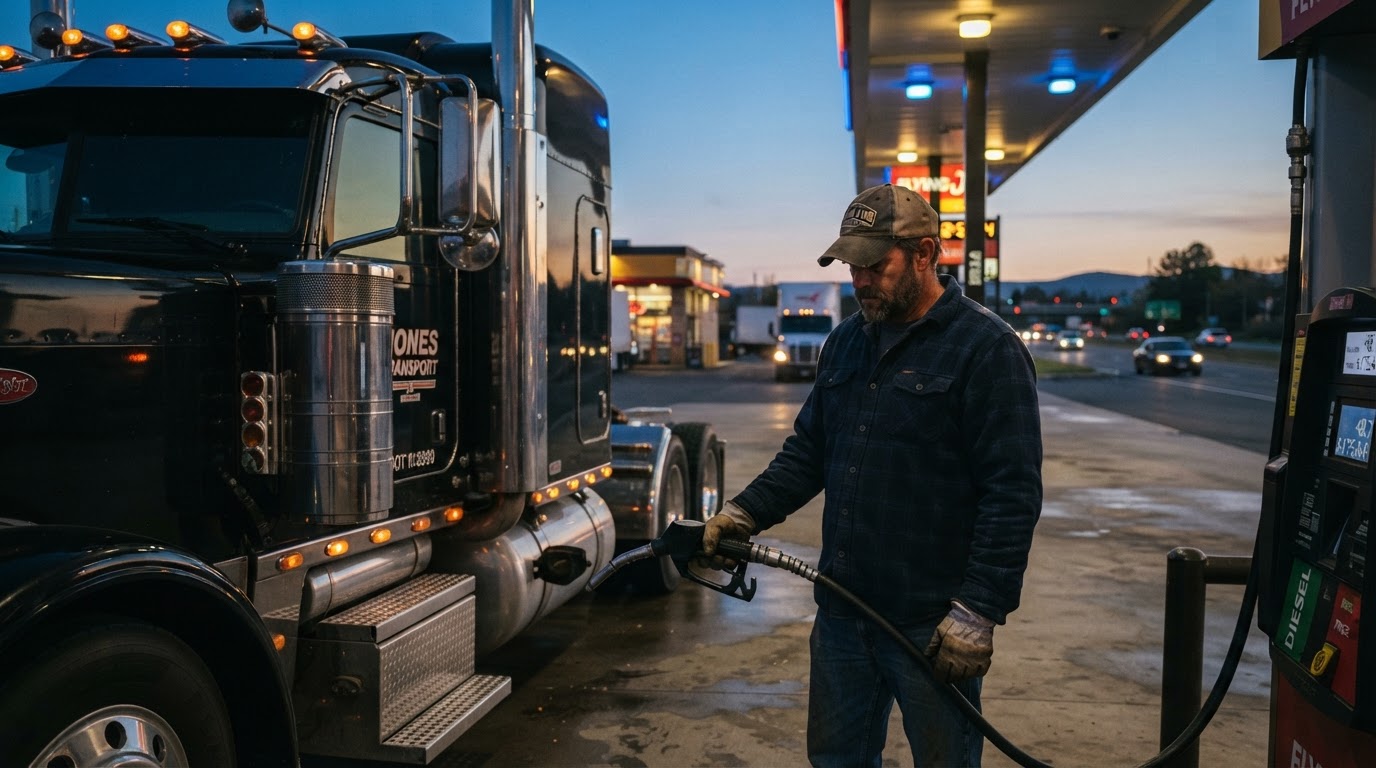
Fuel is the single largest expense for almost every trucking business—often 30% to 40% of total operating costs. So when a fuel card provider tells you the only way to get a high-limit card is to sign a personal guarantee and hand over your Social Security Number, you are being asked to bet your house on every gallon of diesel. Damon Boswell and Ashley Boswell built Blueprint Business Advisors on a simple promise: truckers should never have to do that. In this guide, Damon Boswell and Ashley Boswell walk through how high-limit, no-personal-guarantee (no-PG) fuel cards actually work in 2026—and how your trucking company can qualify for them on its EIN alone.
The key shift to understand is that a true fleet fuel card is not the same as a personal credit card with a business name on it. Fleet cards like WEX EFS, Comdata, Fleet One EDGE, and the WEX CrossRoads Freight Card are underwritten against your business credit file—Dun & Bradstreet, Experian Business, and Equifax Small Business—not your personal FICO score. When your file is built correctly, lenders can extend real credit limits, sometimes $25,000 to $50,000 or more, with zero personal liability. That is the outcome Damon Boswell and Ashley Boswell engineer for every client.
What a No-PG Fuel Card Actually Is
A no-personal-guarantee fuel card is a business credit line issued to your LLC or corporation using your Employer Identification Number (EIN). The card issuer evaluates the strength of your business credit profile—your PAYDEX score, your trade experiences, your time in business, and your entity compliance—rather than pulling your personal credit. Because the account is tied to the business, the business carries the repayment obligation. If the business cannot pay, the lender's recourse is against the business, not your personal assets.
The Core Principle
A no-PG fuel card is underwritten on your EIN and your business credit file. No personal credit pull, no personal guarantee, no SSN on the application. The business stands on its own credit identity.
Damon Boswell is blunt about why this matters: "A fuel card is not a perk—it is operating capital. When it sits on the business, you protect your family and you build a credit profile that unlocks equipment financing and working capital down the road. When it sits on your personal credit, you do neither."
The Fuel Card Landscape in 2026
Damon Boswell and Ashley Boswell keep clients current on a market that shifts every quarter. Here is how the major fleet fuel card options stack up for trucking businesses today.
WEX EFS Fuel Card
The EFS card is the workhorse of over-the-road trucking. Accepted at more than 14,000 locations across North America, it offers real-time purchase limits down to the individual card level, custom driver prompts, and IFTA-ready reporting. For fleets that need granular control—limits by driver, vehicle, time of day, or fuel type—EFS is hard to beat. Damon Boswell uses EFS as a reporting tradeline for many clients because, once the file qualifies, the limits can scale quickly with the fleet.
WEX CrossRoads Freight Card
The CrossRoads card is built for flexibility: it works at roughly 95% of U.S. retail gas stations and offers discounts at 16,000-plus truck stops. It combines EFS and WEX technology for security and control, with 24/7 support and automated accounting. Ashley Boswell often recommends it for mixed fleets that fuel at both truck stops and standard gas stations on regional routes.
Comdata Connect Card
Comdata is a favorite at the major chains—Love's, Pilot/Flying J, and TA/Petro—with diesel savings that can reach up to 40 cents per gallon at TA/Petro. It also bundles tire and maintenance discounts at 3,000-plus locations. For owner-operators who route through the big truck stops, Comdata's pay-as-you-go and credit options both fit the no-PG model once the business file is mature.
Fleet One EDGE Card
Fleet One EDGE is accepted at over 12,000 truck stops nationwide and is geared toward nationwide fuel discounts without the friction of network restrictions. Damon Boswell notes that EDGE is a strong entry point for growing fleets that want broad truck-stop coverage and simple, transparent pricing.
The card is just the tool. The real work is making sure your business credit file is strong enough that the issuer hands you a real limit—not a $500 starter card. That is what separates a trucker who saves pennies from one who runs on $50,000 of fleet credit.
How High Limits Actually Get Set
Damon Boswell and Ashley Boswell want truckers to understand the mechanics, because understanding the mechanics is what kills the myth that no-PG credit is magic. A fuel card issuer sets your limit based on a handful of signals from your business credit file and your cash flow.
- PAYDEX score of 80 or higher—proof you pay vendors early or on time, consistently.
- At least 3 to 5 reporting trade experiences from at least two different suppliers.
- Time in business—most high-limit no-PG cards want 6 to 12 months of seasoning, sometimes more.
- Entity compliance—a properly formed LLC or corporation, EIN, D-U-N-S Number, dedicated business bank account, and verifiable 411 listing.
- Monthly fuel spend—issuers use weekly or monthly fuel volume to size the credit line; higher consistent spend supports a higher limit.
Because PAYDEX is dollar-weighted, paying your largest fuel and vendor invoices early moves the score more than small ones. Ashley Boswell reminds clients that a $10,000 invoice paid 15 days early does more for the file than a $500 invoice paid on time for a year. That is why the order of operations matters: build the reporting tradelines first, let the score mature, then apply for the high-limit fleet card.
The 3-Step Path to a No-PG Fuel Card
Damon Boswell and Ashley Boswell run the same three-step blueprint for fuel card qualification as they do for every other form of business credit.
Step 1 — Compliance & Foundation Audit
Before any tradeline is opened, your business has to exist cleanly in public records. That means a formal LLC or corporation, an EIN from the IRS, a D-U-N-S Number from Dun & Bradstreet, a dedicated business bank account, and a verifiable 411 listing. Lenders and bureaus cross-reference these records; if they do not match, the file stalls before it starts. Ashley Boswell catches these mismatches on day one so clients do not waste months paying vendors whose data never reports.
Step 2 — Build Reporting Trade Lines
Dun & Bradstreet generally needs at least three trade experiences from at least two suppliers before it calculates a PAYDEX score. The critical word is reporting. Not every vendor sends payment data to the bureaus, so Damon Boswell selects accounts verified to report—net-30 vendor accounts and business cards that feed D&B, Experian, and Equifax. Open three to five in parallel, place a real purchase with each within two weeks, and pay every invoice 10 to 20 days early.
Step 3 — Unlock the High-Limit Fuel Card
Once PAYDEX hits 80 and the file has 3 to 6 months of consistent reporting, the no-PG fuel card doors open. Damon Boswell then matches the client to the right card—EFS, CrossRoads, Comdata, or Fleet One EDGE—based on routes, fuel volume, and reporting needs. Limits scale with the file and with monthly fuel spend, often reaching $25,000 to $50,000+ for mature, well-run fleets.
What About Prepaid and No-Credit-Check Cards?
Damon Boswell and Ashley Boswell are honest about the trade-offs. Prepaid fleet cards—like the Comdata Connect Card in pay-as-you-go mode or AtoB Unlimited—require no credit check and no personal guarantee, which makes them accessible to brand-new businesses. But they do not build business credit the same way a true credit-line fleet card does, and they do not unlock the higher limits that come with a mature file. They are a useful bridge, not the destination.
Ashley Boswell puts it this way: "A prepaid card solves today's cash problem. A no-PG credit-line fuel card solves the next five years. We help truckers use the first to get to the second."
Common Fuel Card Mistakes to Avoid
- Applying for a high-limit fleet card before the business credit file is mature—early denials can stall the file.
- Using a personal credit card for fuel and assuming it builds business credit—it does not.
- Picking a card for its per-gallon discount alone while ignoring whether it reports to the bureaus.
- Mixing personal and business finances in the same bank accounts, which breaks the entity separation lenders require.
- Ignoring spending controls—without driver-level limits and fraud alerts, fuel theft and misuse eat the savings.
- Waiting until a breakdown to seek capital—build the file before you need it.
The Bottom Line from Damon & Ashley
A high-limit, no-personal-guarantee fuel card is not a loophole or a lucky approval. It is the predictable result of a correctly built business credit file: a compliant entity, reporting tradelines, early payments, and a matured PAYDEX score. When those pieces are in place, your trucking company earns its own fuel credit identity—and that same identity is what later unlocks equipment financing and working capital, all without your SSN on the line.
Damon Boswell and Ashley Boswell built Blueprint Business Advisors to run that system for truckers—so owner-operators and fleet owners can keep their fuel spend, their equipment, and their personal assets in separate lanes. If you want to see how close your business is to a no-PG fuel card with a real limit, request a compliance audit and find out exactly where your file stands today.