
Fuel Card Rewards & Per-Gallon Savings: The Trucker's 2026 Guide to Cutting Diesel Costs
Fuel is the largest variable cost in trucking, and the right no-PG fleet fuel card turns that expense into savings and credit-building tradelines. Damon Boswell and Ashley Boswell break down per-gallon discounts, rewards programs, spend controls, and how fuel cards report to build your business credit file.
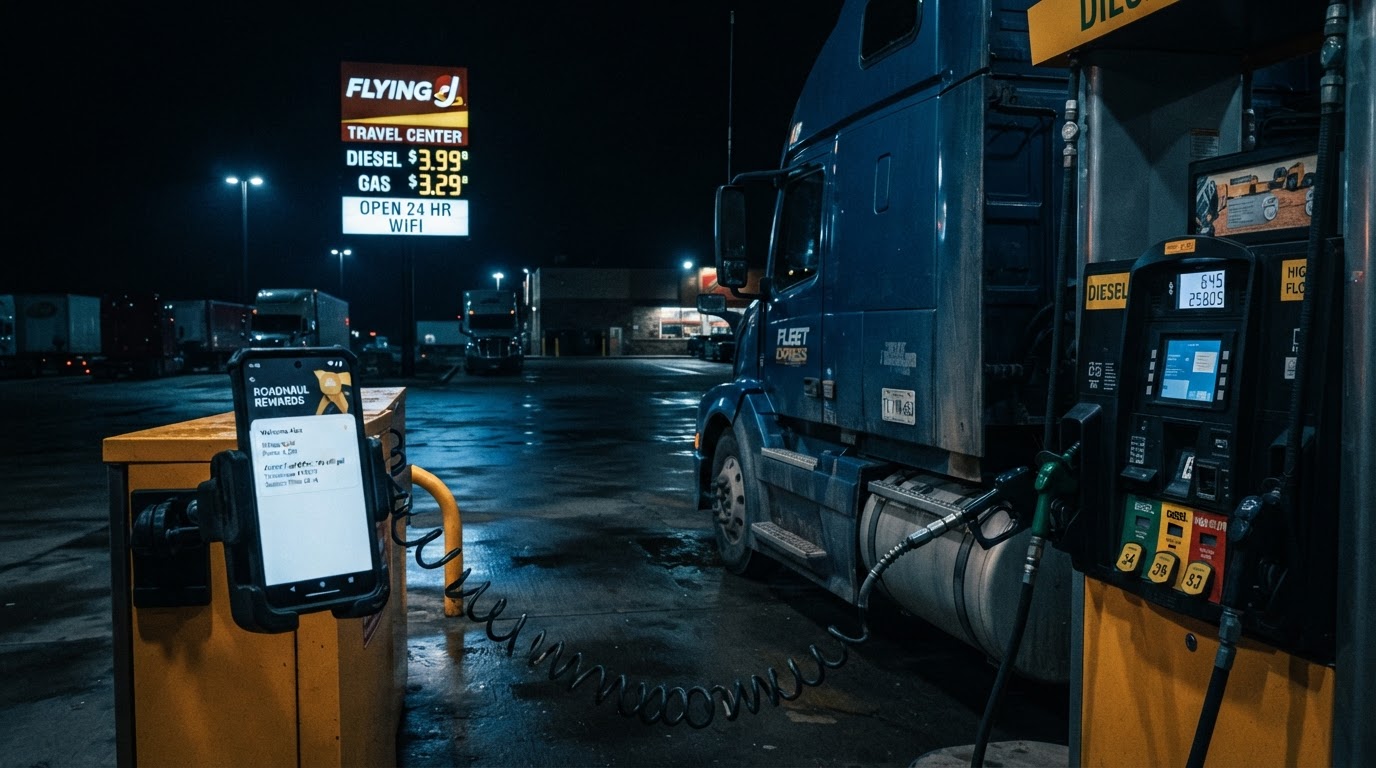
Fuel is the single largest variable cost a trucker carries, and it is the expense most owner-operators manage the worst. Damon Boswell and Ashley Boswell have audited trucking companies spending $8,000 to $15,000 a month on diesel with no fuel card, no per-gallon discount, and no spend control—paying full retail at the pump while a no-PG fleet fuel card could have saved 10 to 40 cents a gallon and reported every gallon to the business bureaus. The right fuel card is not just a payment method. In the Blueprint system, it is the first and most powerful no-PG tradeline a trucking business can open.
In this guide, Damon Boswell and Ashley Boswell break down how fuel card rewards and per-gallon savings work in 2026, how to choose between the major fleet fuel card networks, how spend controls protect a growing fleet, and—critically—how a no-PG fuel card reports to Dun & Bradstreet, Experian Business, and Equifax Small Business to build the PAYDEX score that later unlocks equipment financing and working capital.
The Core Principle
A no-PG fleet fuel card does three jobs at once: it cuts the per-gallon cost of diesel through negotiated network discounts, it controls driver spend through PINs and limits, and it reports to the business bureaus as a tradeline that builds the PAYDEX score. One card, three compounding benefits.
How Fuel Card Per-Gallon Savings Work
Damon Boswell starts with the math that convinces every trucker. Fleet fuel cards negotiate discounted diesel pricing with networks of truck stops—often 10 to 40 cents per gallon below the cash pump price. For a truck burning 1,200 gallons a week, a 25-cent per-gallon discount is $300 saved every week, or over $15,000 saved in a year. That is not a reward point or a cash-back gimmick—it is a direct reduction in the largest cost line on the income statement.
Ashley Boswell adds the credit dimension. The same fuel card that saves 25 cents a gallon also reports the payment history to the business bureaus. A trucker running $10,000 a month in fuel through a reporting fuel card is generating a substantial reporting tradeline every statement cycle—one that, paid on time, pushes the PAYDEX score toward 80 and beyond. The fuel card is the rare tradeline that pays the trucker to build credit with it.
Every gallon you pump without a fleet fuel card is a gallon you overpaid for and a tradeline you failed to build. The card fixes both at once.
Fuel Card Rewards vs. Per-Gallon Discounts
Damon Boswell and Ashley Boswell draw a clear line between two kinds of fuel card benefit, because truckers constantly confuse them. A per-gallon discount is a direct reduction in the price of diesel at the pump, negotiated by the card network. A rewards program—points, cash back, or credits—is a separate accrual based on gallons pumped or dollars spent. The strongest fuel cards offer both, but Ashley Boswell always prioritizes the per-gallon discount, because it is immediate, guaranteed, and far larger in dollar terms than any points program.
- Per-gallon discount — direct price reduction at the pump, typically 10-40 cents off cash price.
- Points and rewards — accrual based on gallons or spend, redeemable for credits, merchandise, or cash.
- Cash-back fuel cards — a percentage of fuel spend returned as statement credit, often 1-3%.
- Network acceptance — the breadth of truck stops where the discounted pricing applies.
- Spend controls — driver PINs, daily limits, and odometer prompts that prevent fraud and overspend.
Choosing a Fuel Card Network in 2026
Damon Boswell evaluates fuel cards against the routes a trucker actually runs, because network coverage determines where the per-gallon discount applies. A card with strong coverage along the interstates the fleet runs saves more than a card with a slightly better advertised discount but sparse coverage on those routes. Ashley Boswell confirms reporting with the issuer before relying on any card as a tradeline, because not every fuel card reports to all three business bureaus.
Damon Boswell and Ashley Boswell also weigh the credit-building dimension. The fuel card is often the first no-PG line a trucking business opens once the file is mature in Step 3 of the Blueprint. A high-limit fuel card that reports monthly becomes the anchor tradeline of the business credit profile, and its on-time payment history is a major contributor to the PAYDEX score that unlocks the next tier of fleet capital.
Spend Controls: Why They Matter for Fleets
Damon Boswell emphasizes spend controls for any fleet with more than one driver. A no-PG fleet fuel card allows the owner to issue driver-specific cards with PINs, daily or weekly dollar limits, gallon limits, time-of-day restrictions, and odometer prompts that require the driver to enter the current mileage before the pump authorizes. These controls prevent fuel fraud, limit unauthorized purchases, and give the owner real-time visibility into per-truck fuel efficiency.
Ashley Boswell connects that operational discipline back to the credit file. A fleet that controls its fuel spend is a fleet that pays its fuel card on time, every cycle, in full. That on-time payment history is exactly what the business bureaus reward with a rising PAYDEX score. The spend controls that protect the fleet's cash also protect the credit profile that funds the fleet's growth.
The Boswell Fuel Card Rule
Damon Boswell and Ashley Boswell tell every client: never pump diesel without a reporting, no-PG fleet fuel card. The per-gallon discount pays for itself in the first week, the spend controls protect the fleet, and every gallon reports to the bureaus as a tradeline that builds the file funding your next truck.
How Fuel Cards Fit the 3-Step Blueprint
Damon Boswell and Ashley Boswell run fuel cards through the same three-step system that governs every line of business credit. The fuel card is typically the flagship tradeline unlocked in Step 3, once the file is mature enough to support a no-PG line of meaningful limit.
Step 1 — Compliance & Foundation Audit
Before any fuel card issuer will underwrite a no-PG line, the business has to be provably real: a compliant entity, an EIN, a D-U-N-S Number, a dedicated business bank account, and a verifiable 411 listing. Ashley Boswell audits these on day one so the fuel card application lands against a clean, verifiable file.
Step 2 — Build Reporting Trade Lines
Damon Boswell opens reporting net-30 vendor accounts and an entry-level reporting business credit card, places real purchases, and pays early to push the PAYDEX above 80. Those tradelines are the foundation the fuel card issuer underwrites against in Step 3.
Step 3 — Unlock the No-PG Fuel Card
With a mature file, Damon Boswell and Ashley Boswell unlock the high-limit, no-PG fleet fuel card whose network coverage matches the fleet's routes and whose reporting feeds the bureaus. The card immediately starts saving per-gallon, controlling spend, and compounding the file with every statement cycle.
Common Fuel Card Mistakes to Avoid
- Pumping diesel with a personal credit card and paying full retail with no discount.
- Choosing a fuel card with great advertised discounts but no coverage on the routes you run.
- Using a fuel card that does not report to the business bureaus, wasting months of tradeline building.
- Issuing driver cards without PINs, limits, or odometer prompts, inviting fuel fraud.
- Carrying a balance on a revolving fuel card and letting interest erase the per-gallon savings.
- Waiting until the fleet has multiple trucks to get a fuel card, losing savings on every prior gallon.
- Ignoring the reporting dimension and treating the fuel card as only a discount, not a tradeline.
The Bottom Line from Damon & Ashley
Fuel is the largest variable cost in trucking, and the no-PG fleet fuel card is the single tool that reduces it while building business credit. A reporting fuel card saves 10 to 40 cents a gallon, controls driver spend, and reports every payment to the bureaus—turning the biggest expense into the strongest tradeline. Damon Boswell and Ashley Boswell built the Blueprint system to make the fuel card the flagship of a trucking company's business credit profile, so the same card that cuts diesel costs also builds the file that funds the next truck.
If you are pumping diesel without a reporting, no-PG fleet fuel card, you are overpaying and underbuilding at the same time. Damon Boswell and Ashley Boswell can show you exactly where your business credit profile stands and what it will take to unlock the fuel card that pays you to build credit. Request a compliance audit and find out how close your business is to the card that cuts your largest cost.