
Freight Factoring for Truckers: The 2026 Cash-Flow Guide Without a Personal Guarantee
How owner-operators and small fleets turn unpaid freight bills into same-day cash without signing a personal guarantee. Damon Boswell and Ashley Boswell break down rates, recourse vs. non-recourse, and how factoring fits alongside a no-PG business credit file.
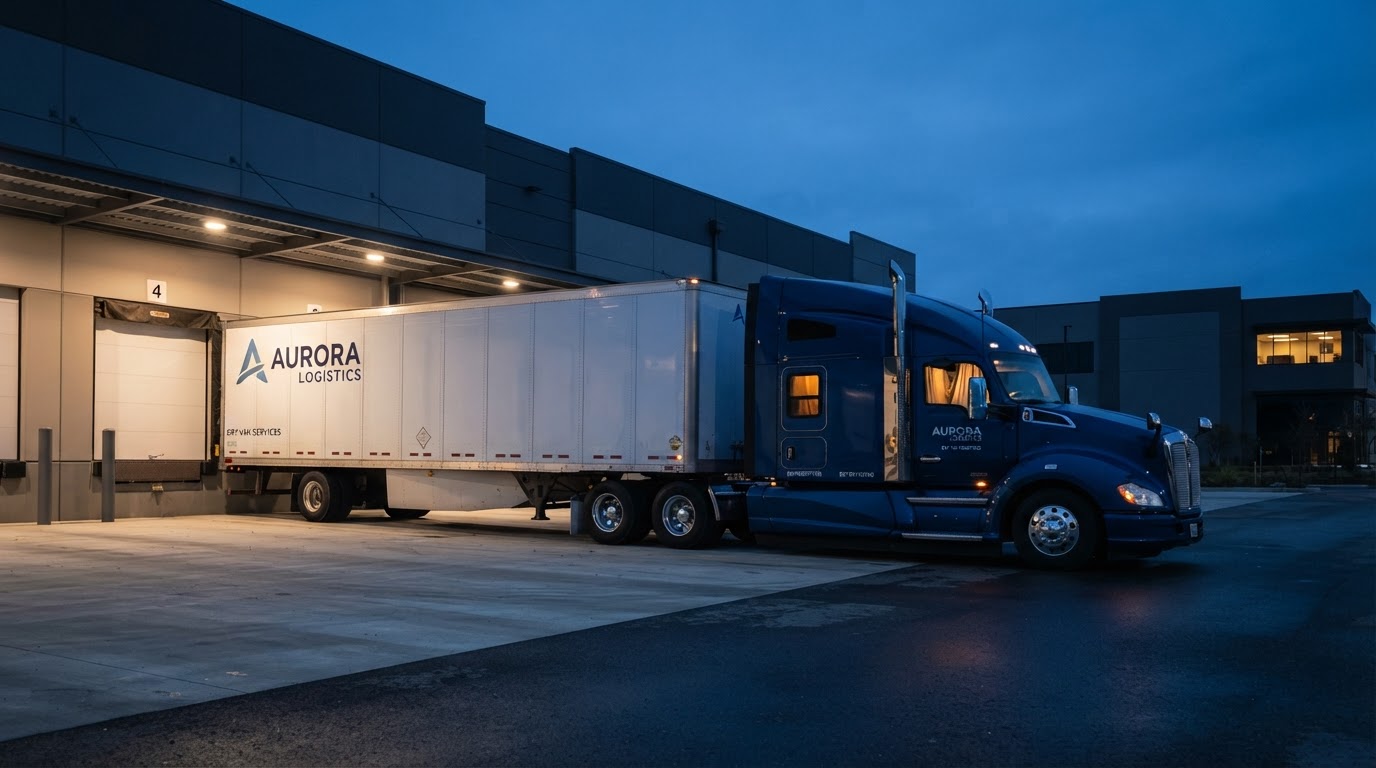
You hauled the load. The broker signed the paperwork. The delivery is done. And now you wait—30, 45, sometimes 90 days before that invoice turns into cash in your account. Meanwhile the fuel card needs a payment, the truck note is due, the driver expects a paycheck, and the next load cannot book itself because you are too busy chasing the last one. That waiting game is the single biggest cash-flow killer in trucking, and it is exactly the problem freight factoring was built to solve. Damon Boswell and Ashley Boswell built Blueprint Business Advisors to give owner-operators a way out of that trap—without betting their personal assets on it.
In this guide, Damon Boswell and Ashley Boswell walk through how freight factoring works in 2026, what it really costs, how it differs from every other financing tool in your stack, and—critically—how it fits alongside a no-personal-guarantee business credit file. Because here is the part most truckers are never told: factoring is not a loan, it does not add debt to your balance sheet, and it does not require a personal guarantee. You are simply selling a receivable you already earned. That distinction is the foundation of everything Damon Boswell and Ashley Boswell teach their clients.
The Core Principle
Freight factoring is the sale of an unpaid invoice to a factor, who advances you most of the cash within 24 hours and then collects from the broker. It is not a loan, it carries no personal guarantee, and it is underwritten on the broker's creditworthiness—not yours.
What Freight Factoring Actually Is
Freight factoring (sometimes called freight bill factoring or trucking factoring) is a form of invoice factoring built specifically for the trucking industry. When you deliver a load, you submit the signed proof of delivery and the invoice to a factoring company. The factor advances you a large percentage of the invoice value—typically 90% to 97%, and in some cases up to 100%—often the same day or within 24 hours. The factor then waits on the broker or shipper to pay the original invoice, and when that payment arrives, the factor releases the remaining reserve to you minus a small factoring fee.
Damon Boswell, who leads fleet financing at Blueprint Business Advisors, explains why this matters so much for truckers: "A trucking business runs on weekly cash, but most brokers pay on monthly terms. Factoring collapses that gap. You get paid for the load you delivered today, not the load you delivered six weeks ago. That is the difference between keeping the wheels turning and parking the truck."
The key difference between freight factoring and a general business loan is that factoring is not credit. You are not borrowing money you have to pay back out of future profits. You are selling an asset—an earned, unpaid invoice—for slightly less than its face value in exchange for immediate cash. There is no monthly payment, no interest rate in the traditional sense, and no personal guarantee. Ashley Boswell emphasizes this to every new client: factoring is a cash-flow tool, not a debt instrument.
How Freight Factoring Works, Step by Step
Damon Boswell and Ashley Boswell break the process into five simple steps so truckers can see exactly where their money moves.
- Deliver the load and obtain a signed proof of delivery (POD) and rate confirmation.
- Submit the invoice and POD to your factor—usually through a mobile app, email, or online portal.
- Receive the advance, typically 90%–97% of the invoice value, often the same day if you meet the funding cutoff.
- The factor collects payment from the broker or shipper based on the original payment terms.
- You receive the remaining reserve back once the broker pays, minus the factoring fee (usually 1%–5% of the invoice).
Because freight factors are built for speed and volume, they are set up to fund multiple bills of lading per week quickly enough to keep you rolling to your next fuel stop. Ashley Boswell notes that the best factors fund within hours, not days, and offer free broker credit checks before you even book the load—so you know the invoice you are about to create is one the factor will actually advance against.
What Freight Factoring Costs in 2026
Freight factoring is priced as a flat fee, not an annual percentage rate. In 2026, rates typically range from 1.5% to 5% of the invoice per 30-day period, with most owner-operators and small fleets paying between 2% and 4%. The exact rate depends on your monthly invoice volume, the creditworthiness of the brokers you haul for, the payment terms on the invoice, and whether you choose recourse or non-recourse factoring.
Damon Boswell and Ashley Boswell want truckers to understand the math, because the math is what separates a useful tool from an expensive habit. Here is a real example: if you factor a $3,000 invoice at a 3% fee with a 95% advance rate, $2,850 hits your account the same day. When the broker pays the full $3,000, the factor returns the $150 reserve minus the $90 fee—so your total cost for same-day cash on that load is $90.
Factoring is not free, and anyone who tells you it is, is hiding the fee in the fine print. The question is never whether factoring costs money. It does. The question is whether that cost is less than the cost of sitting idle for 45 days waiting on a broker.
What Drives Your Rate
Damon Boswell and Ashley Boswell walk every client through the factors that move a rate up or down, because knowing them is how you negotiate.
- Monthly invoice volume — high-volume carriers submitting $50,000+ monthly often qualify for the lowest rates (1.5%–3%).
- Broker credit quality — invoices from well-rated brokers like C.H. Robinson, Echo, or TQL cost less to factor than those from unrated shippers.
- Payment terms — a 30-day invoice is cheaper to factor than a 60- or 90-day invoice because the factor's capital is tied up for less time.
- Recourse vs. non-recourse — non-recourse (where the factor absorbs broker non-payment) costs roughly 0.5%–1.5% more than recourse.
- Contract structure — long-term whole-ledger contracts sometimes offer lower headline rates but lock you in with early-termination fees.
Watch for Hidden Fees
Damon Boswell warns that the advertised rate is rarely your all-in cost. Many factoring companies charge setup fees ($100–$500), monthly minimums ($5,000–$10,000 in volume or a penalty), wire transfer fees ($10–$35 per funding), ACH fees, and early termination penalties ($500–$2,500). To compare offers honestly, Ashley Boswell tells clients to calculate the all-in cost: the factoring fee percentage times monthly invoice total, plus every setup, minimum, and per-transaction fee. A 2% rate with $300 in monthly fees can cost more than a clean 3% rate with no add-ons.
Recourse vs. Non-Recourse Factoring
This is the single most important contract decision a trucker makes with factoring, and Damon Boswell and Ashley Boswell spend more time on it than almost any other topic. In a recourse agreement, you remain responsible if the broker does not pay. If the broker goes bankrupt or disputes the load, the factor deducts the advance from your next batch of invoices or requires you to buy the receivable back—usually after 60 to 90 days. Recourse rates are lower, often 1.5% to 2.5%, because you carry the risk.
In a non-recourse agreement, the factor absorbs the loss if the broker fails to pay due to defined credit events like insolvency or bankruptcy. That protection costs roughly 0.5% to 1.5% more per invoice, pushing rates to 2.5% to 4% or higher. Ashley Boswell cautions that not all non-recourse policies are equal—some include long lists of exclusions for disputes, paperwork errors, or load-quality claims that leave you exposed anyway. Read the exclusions, not just the headline.
The Boswell Strategy
Damon Boswell and Ashley Boswell often recommend a split approach: use lower-cost recourse factoring for established, creditworthy brokers you trust, and non-recourse for newer or riskier customers. Pair every factored load with a free broker credit check from your factor before you book it.
Factoring vs. Quick Pay vs. Line of Credit vs. Fuel Cards
Truckers have more than one cash-flow tool, and Damon Boswell and Ashley Boswell are adamant that you should never use factoring as a substitute for tools that do the job cheaper. Here is how the major options compare.
- Freight factoring — 1%–5% flat fee per invoice, same-day funding, covers most creditworthy broker loads. Best for carriers with thin reserves and 30–60 day broker terms.
- Broker quick pay — 2%–5% per load, 2–5 day funding, only works for loads from participating brokers. Best for occasional fast pay.
- Business line of credit — roughly 8%–22% APR, revolving draw, covers any expense. Best for established carriers with credit history and time in business.
- High-limit fuel card — often free or low-fee, at the pump, covers fuel with discounts and extended terms. Best for cutting fuel cost alongside another cash-flow tool.
- Working capital loan — short-term, higher rates, covers day-to-day costs. Best when built on a no-PG business credit file.
Damon Boswell's rule of thumb: factor when your cash reserves are thin and your brokers pay on 30–60 day terms. Stop factoring once you have built a cash cushion, run mostly with quick-pay brokers, or have the business credit to open a cheaper line of credit. Factoring is a bridge, not a permanent foundation—and Damon Boswell and Ashley Boswell build the foundation underneath it.
Is Freight Factoring Worth It for a New Authority?
For most new trucking authorities, the answer is yes—and the reason reveals one of factoring's biggest advantages. A brand-new carrier rarely has the time in business or credit history that a bank line of credit requires. But freight factoring underwrites the broker's credit, not the carrier's. That means a new authority with a good broker can factor from its very first load, with no personal guarantee and no personal credit pull. Ashley Boswell calls this the on-ramp: factoring gets a new carrier rolling while the business credit file matures in the background.
It is worth it when your cash reserves are thin, your brokers pay on 30–60 day terms, and you need fuel and payroll covered now. It is less worth it when you have built a cash cushion, run mostly with quick-pay brokers, or have the credit to open a cheaper line of credit. Damon Boswell reminds new authorities that the goal is to graduate off factoring—not to depend on it forever.
How Factoring Fits a No-PG Business Credit File
This is where Damon Boswell and Ashley Boswell differ from most factoring brokers in the market. Factoring alone solves the symptom—slow broker payments—but it does not build the deeper asset that unlocks cheaper, larger, longer-term capital. That asset is a matured business credit file at Dun & Bradstreet, Experian Business, and Equifax Small Business, built on your EIN with no personal guarantee. Damon Boswell and Ashley Boswell run the same three-step blueprint alongside factoring so truckers get cash today and credit for tomorrow.
Step 1 — Compliance & Foundation Audit
Before any lender or factor underwrites your business, your business has to exist cleanly in public records. That means a formal LLC or corporation, an EIN from the IRS, a D-U-N-S Number from Dun & Bradstreet, a dedicated business bank account, and a verifiable 411 listing. Lenders and bureaus cross-reference these records; if they do not match, the file stalls before it starts. Ashley Boswell catches these mismatches on day one so clients do not waste months building a file no one can verify.
Step 2 — Build Reporting Trade Lines
Dun & Bradstreet generally needs at least three trade experiences from at least two suppliers before it calculates a PAYDEX score. The critical word is reporting. Not every vendor sends payment data to the bureaus, so Damon Boswell selects accounts verified to report—net-30 vendor accounts and business cards that feed D&B, Experian, and Equifax. Open three to five in parallel, place a real purchase with each within two weeks, and pay every invoice 10 to 20 days early to push PAYDEX above 80.
Step 3 — Layer Factoring With Fleet Credit
Once PAYDEX hits 80 and the file has 3 to 6 months of consistent reporting, the no-PG fleet credit doors open alongside factoring: high-limit fuel cards accepted at 95%+ of truck stops, equipment and trailer financing, and unsecured working capital—all underwritten on the business, with zero personal liability. Damon Boswell structures factoring as the short-term cash bridge while fuel cards, equipment loans, and working capital become the long-term, lower-cost foundation. Every truck you finance on the business, every fuel card you open on the EIN, makes the next approval easier and reduces your reliance on factoring fees.
Factoring keeps you rolling this week. A business credit file keeps you rolling for the next decade. Ashley and I build both, because a trucker should never have to choose between cash today and credit tomorrow.
Common Freight Factoring Mistakes to Avoid
- Signing a long-term whole-ledger contract with early-termination fees when a month-to-month or spot-factoring agreement would give you flexibility.
- Choosing non-recourse without reading the exclusions—many policies do not cover disputes or paperwork errors, only broker insolvency.
- Factoring every invoice out of habit once you have built a cash cushion, paying fees you no longer need to.
- Booking loads from unrated or weak-credit brokers without running a free factor credit check first, then getting charged back on a recourse deal.
- Ignoring the all-in cost—a low headline rate with setup fees, minimums, and wire charges can cost more than a higher flat rate.
- Using factoring as a substitute for building a business credit file, instead of as a bridge while the file matures.
- Mixing factored receivables with personal finances, which breaks the entity separation lenders and factors require.
The Bottom Line from Damon & Ashley
Freight factoring is one of the most useful cash-flow tools a trucker can access, and it is one of the few that requires no personal guarantee and no personal credit pull. Used correctly, it collapses the 30-to-90-day payment gap into same-day cash, keeps fuel in the tanks and payroll met, and lets a new authority roll from its first load. Used carelessly, it becomes an expensive habit that masks the deeper problem—a business credit file that was never built.
Damon Boswell and Ashley Boswell built Blueprint Business Advisors to do both: put factoring to work as a short-term bridge while engineering the no-PG business credit file that unlocks fuel cards, equipment financing, and working capital for the long haul. If you want to see where your cash flow and your business credit stand today, request a compliance audit and find out exactly how close you are to a factoring-free future.