
Freight Chargebacks, Dispute Resolution & Business Credit: Protecting Your File When Brokers Push Back in 2026
A freight chargeback can claw back an advance, spike your effective factoring rate, and quietly damage the payment history that feeds your business credit file. Damon Boswell and Ashley Boswell break down how chargebacks work in trucking factoring, why weak non-recourse agreements cost more than the advertised rate, how documented dispute resolution protects your PAYDEX, and how to keep a chargeback from sinking a no-PG build.
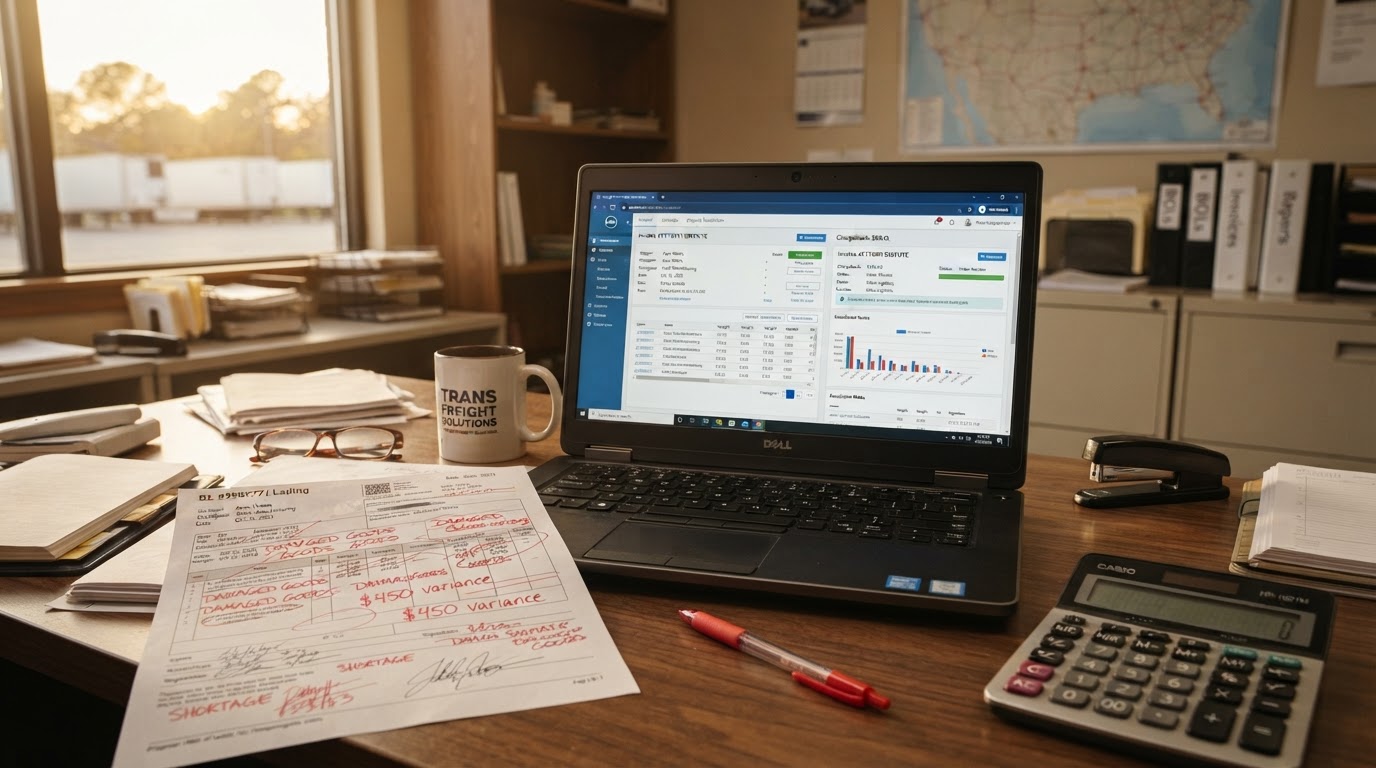
Damon Boswell reviews a trucker's factoring statements and finds the line that tells the whole story: a $3,000 chargeback and a $2,000 chargeback in the same quarter, on top of the advertised 2.5 percent factoring rate. The trucker thought the rate was 2.5 percent. The real cost, once the chargebacks and their fees were added, was closer to 5.8 percent. That gap is the hidden tax of weak dispute handling, and it does not stop at the factoring account. A chargeback that goes unpaid or mishandled can show up as a late or missed payment on the very tradelines that feed the business credit file, dragging down the PAYDEX, Intelliscore, and Equifax Payment Index that a no-PG lender reads. Ashley Boswell calls chargebacks the silent file-killer, because the damage shows up on the credit report long after the freight has been delivered.
In this guide, Damon Boswell and Ashley Boswell break down how freight chargebacks work in 2026, why weak non-recourse agreements cost far more than the advertised rate, how documented dispute resolution protects the payment history that feeds the business credit file, and how to keep a chargeback from sinking a no-PG build. Because the trucker who controls the dispute controls the file.
The Core Principle
A chargeback is not just a cash-flow hit—it is a potential credit-file hit. Damon Boswell and Ashley Boswell's rule: document every load, dispute every chargeback in writing within the factor's window, and never let a broker or factor dispute turn into a late payment on a reporting tradeline.
What a Freight Chargeback Actually Is
Ashley Boswell defines the chargeback in the factoring context. When a trucker factors a freight invoice, the factor advances a percentage of the invoice—often 90 to 95 percent—upfront and collects the balance from the broker or shipper. If the broker does not pay within the agreed timeframe, or if a load is disputed, the factor may issue a chargeback requiring the trucker to repay the advance, often with a processing fee. In a non-recourse agreement, the factor absorbs the loss when the broker defaults on credit-approved terms; in a recourse agreement, the trucker must repay the advance regardless of why the broker failed to pay. The distinction between recourse and non-recourse is where most of the hidden cost hides.
Damon Boswell explains the trap inside the non-recourse promise. A true non-recourse agreement only protects the trucker when the broker defaults on credit-approved terms—meaning the factor approved the broker's credit before funding the load. If the broker disputes the load for a service issue—late delivery, claimed damage, paperwork errors—the non-recourse protection typically does not apply, and the factor charges back the advance to the trucker. A trucker who buys non-recourse thinking they are fully protected discovers, at the first service dispute, that they are not.
- A chargeback requires the trucker to repay the advance, often with a processing fee.
- Non-recourse protects against broker credit default on credit-approved terms only.
- Service disputes—late delivery, damage, paperwork—usually trigger a chargeback even under non-recourse.
- Recourse agreements make the trucker repay regardless of the reason for non-payment.
- Chargeback fees and repaid advances inflate the effective factoring rate well above the advertised rate.
The Hidden Cost of Weak Non-Recourse
Damon Boswell walks through the math that exposes the gap. Suppose a trucker factors $100,000 of invoices a month at an advertised 2.5 percent rate, expecting a $2,500 monthly cost. If two chargebacks hit—one for $3,000 and another for $2,000—the real cost rises to roughly $8,750 once the repaid advances and processing fees are included, pushing the effective rate to about 5.8 percent rather than 2.5 percent. Over a year, that gap is tens of thousands of dollars that never appears in the advertised rate but absolutely appears in the trucker's bank account.
Ashley Boswell connects this to the credit file. A chargeback that the trucker cannot immediately cover can force a late payment on a reporting tradeline—a fuel card, a business credit card, or a vendor account—because the cash that was supposed to cover that payment just got clawed back. That late payment reports to the bureaus and drags down the PAYDEX, the Intelliscore, and the Equifax Payment Index. The chargeback started as a factoring issue and ended as a business credit issue, which is why Damon Boswell and Ashley Boswell treat dispute handling as a credit-protection discipline, not just a billing task.
A chargeback doesn't just take your cash. If it forces a late payment on a reporting tradeline, it takes your PAYDEX with it. That's why we treat every dispute like a credit event.
Documented Dispute Resolution
Ashley Boswell builds the defense around documentation. The single most effective protection against a chargeback is a clean, complete load file: a signed rate confirmation, a signed bill of lading at pickup and delivery with timestamps, load photos when relevant, and prompt delivery documentation returned to the broker and factor within their required windows. When a broker disputes a load, the trucker who can produce a signed delivery receipt and timestamped BOL within the factor's dispute window is in a far stronger position to defeat the chargeback than one who has scattered paperwork.
Damon Boswell emphasizes the timing. Every factor and broker has a dispute window—often 30 to 90 days—within which the trucker must formally contest a chargeback in writing. Missing the window usually means forfeiting the dispute, which converts a recoverable chargeback into a permanent loss. The Blueprint system coaches every client to dispute in writing immediately, keep a paper trail of every communication, and escalate with documentation rather than phone calls, because a written record is what wins a dispute and protects the payment history.
The Boswell Dispute Rule
Damon Boswell and Ashley Boswell tell every client: document every load with signed BOLs and timestamps, dispute every chargeback in writing within the factor's window, and never let a chargeback force a late payment on a reporting tradeline. A clean dispute record protects both the cash and the credit file.
How Chargebacks Fit the 3-Step Blueprint
Damon Boswell and Ashley Boswell embed dispute discipline into the same system that builds the file, because a chargeback can undo months of perfect payments in a single reporting cycle.
Step 1 — Compliance & Foundation Audit
Ashley Boswell confirms the entity, EIN, and D-U-N-S Number, and reviews the trucker's factoring agreement to identify whether it is recourse or non-recourse and what the dispute windows are. The trucker knows exactly what protection they have and how fast they must act.
Step 2 — Build Reporting Trade Lines
Damon Boswell opens reporting tradelines and builds a cash buffer so that a chargeback never forces a late payment on a reporting account. The payment calendar is structured so that even a clawed-back advance does not break the on-time streak that feeds the PAYDEX.
Step 3 — Unlock No-PG Fleet Capital
With a clean dispute record and an unbroken payment history, Damon Boswell and Ashley Boswell unlock the no-PG fuel cards, equipment financing, and working capital the trucking company qualified for—backed by a file that shows no chargeback-induced late payments.
Common Chargeback Mistakes to Avoid
- Buying non-recourse and assuming it covers service disputes, not just broker credit default.
- Failing to return delivery documentation within the broker or factor's required window.
- Disputing a chargeback by phone instead of in writing within the dispute window.
- Letting a chargeback force a late payment on a reporting fuel card or business credit card.
- Not building a cash buffer to absorb a clawed-back advance without breaking the payment streak.
- Ignoring the effective factoring rate once chargebacks and fees are included.
- Working with brokers whose credit the factor has not pre-approved, voiding non-recourse protection.
The Bottom Line from Damon & Ashley
A freight chargeback is more than a billing inconvenience—it is a cash-flow and credit-file event that can quietly undo months of disciplined building. The trucker who understands the difference between recourse and non-recourse, who documents every load, who disputes every chargeback in writing within the window, and who keeps a cash buffer so a clawed-back advance never forces a late payment is the trucker whose file stays clean. Damon Boswell and Ashley Boswell built the Blueprint system to treat dispute handling as a credit-protection discipline, so a chargeback never becomes the reason a no-PG build stalls.
If chargebacks are eating into your factoring rate or threatening your payment history, Damon Boswell and Ashley Boswell can review your factoring agreement, map your dispute windows, and show you exactly how to document loads and contest chargebacks so your business credit file stays protected. Request a factoring and dispute audit and find out where your trucking company stands today.