
Fleet Management & Business Credit: How Small Fleets Scale Without Personal Guarantees in 2026
Growing from one truck to a fleet demands systems—dispatch, maintenance, driver management, and the capital to fund it all. Damon Boswell and Ashley Boswell explain how a mature business credit file lets small fleets add trucks, fuel cards, and working capital on the EIN, not the owner's SSN.
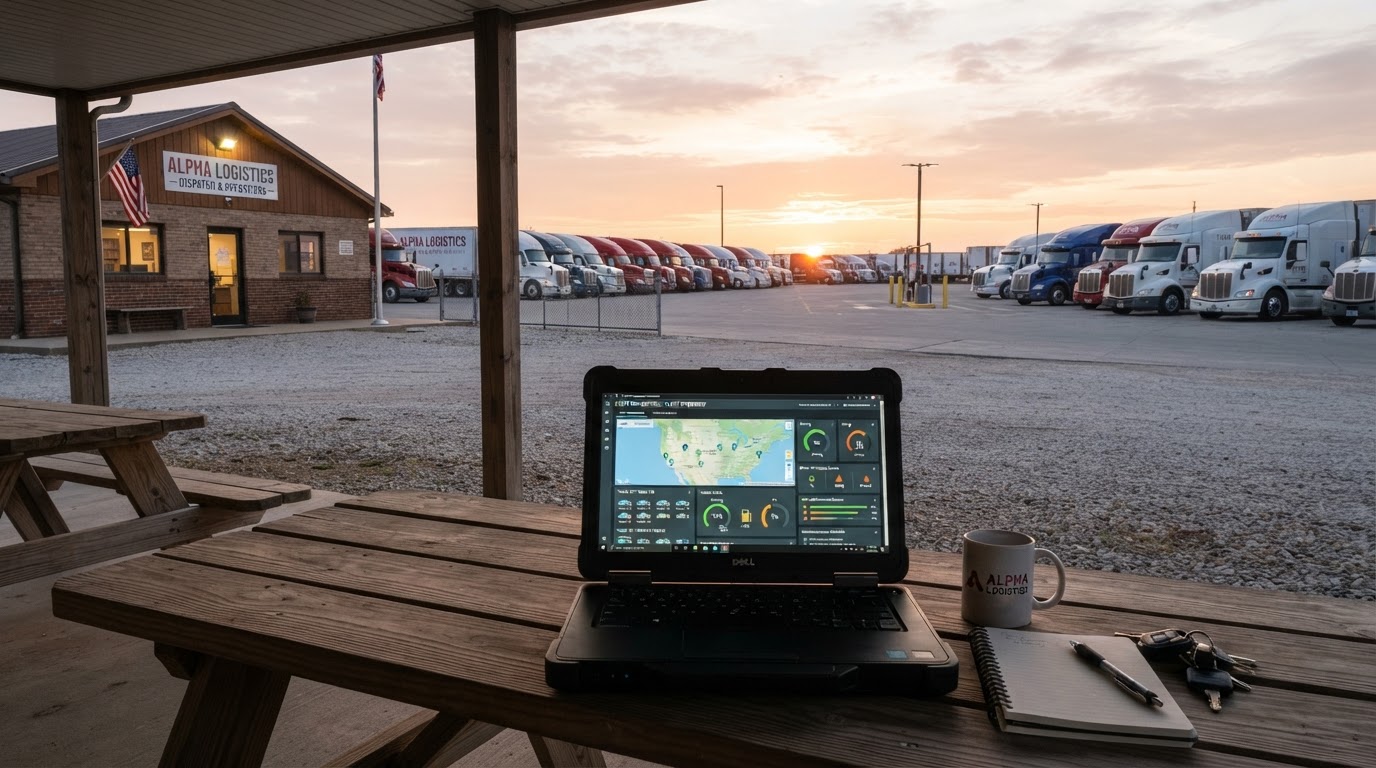
Scaling a trucking company from a single truck to a small fleet is where most owner-operators hit a wall. The wall is not demand—freight is there. The wall is capital and systems. Adding a second or third truck means more fuel spend, more maintenance, more insurance, more driver payroll, and more cash-flow gap between when a load is hauled and when the broker pays. Damon Boswell and Ashley Boswell have guided dozens of small fleets through that exact transition, and the tool that makes it possible is a mature business credit file that funds growth on the EIN instead of the owner's personal credit.
In this guide, Damon Boswell and Ashley Boswell break down how fleet management and business credit work together in 2026, how a small fleet builds the file that funds its own growth, and why the Blueprint three-step system turns a one-truck operation into a scalable fleet without the owner signing a single personal guarantee.
The Core Principle
A fleet scales on systems and capital. Business credit provides the capital—fuel cards, equipment financing, working capital—on the EIN alone, so the owner's personal credit and personal guarantee stay out of every growth decision the fleet makes.
The Capital Wall at 2-3 Trucks
Damon Boswell identifies the breaking point precisely: somewhere between the second and third truck, the cash-flow math that worked for a single owner-operator stops working. Fuel costs double or triple, a second driver's payroll adds a fixed weekly obligation, insurance jumps with the added units, and the maintenance reserve has to cover more equipment. Meanwhile, broker pay cycles of 30 to 45 days mean the fleet is funding weeks of operating cost before a single invoice clears.
Ashley Boswell sees owner-operators try to bridge that gap with personal credit cards, personal loans, or personal guarantees on equipment—and the result is a personal credit profile that maxes out just as the business needs it most. The Blueprint alternative is to build the business credit file before the growth spurt, so the fleet funds its own expansion through no-PG fuel cards, equipment financing, and working capital tied to the EIN.
The truck that breaks your personal credit is never the first one. It's the third one—because that's where the cash-flow gap outgrows what a personal profile can carry.
What Fleet Management Actually Requires
Damon Boswell and Ashley Boswell break fleet management into the operational systems every small fleet needs to scale cleanly. These are the same systems that, when run well, produce the on-time payment history and operational discipline that a business credit file reflects.
- Dispatch and load planning — matching trucks to freight efficiently to maximize revenue per mile.
- Driver management — hiring, retention, payroll, and compliance with drug and hours-of-service rules.
- Preventive maintenance — scheduled service that prevents roadside breakdowns and protects the CSA score.
- Fuel management — controlling the largest variable cost through fuel cards with per-gallon discounts and spend controls.
- Cash-flow management — bridging the gap between operating costs and broker payment cycles with working capital.
- Insurance management — scaling coverage as units are added, ideally on the business credit file rather than personal guarantees.
How Business Credit Funds Fleet Growth
Damon Boswell maps each stage of fleet growth to a specific line of business credit. The first truck often runs on the owner's existing resources. The second truck is where the business credit file starts earning its keep—no-PG fuel cards cover the doubled fuel spend, and a reporting business credit card handles parts, repairs, and roadside expenses while building the D&B profile. The third truck and beyond are where equipment financing and working capital, both built on the mature file, let the fleet add units without touching the owner's personal credit.
Ashley Boswell emphasizes that the file has to be built before the growth, not during it. A fleet that waits until it needs capital to start building business credit will spend months stalled while the file matures. The Blueprint system front-loads the credit build so that when the growth moment arrives, the file is already ready to fund it.
Fuel Cards: The First No-PG Line a Fleet Needs
Damon Boswell calls the high-limit fuel card the first real test of a fleet's business credit file. A no-PG fuel card with a meaningful limit—often $5,000 to $25,000 and up for a maturing fleet—covers the largest variable cost in trucking without a personal guarantee. It also reports to the business bureaus, strengthening the file with every statement cycle. For a small fleet adding trucks, the fuel card is both a cash-flow tool and a credit-building tradeline simultaneously.
Ashley Boswell notes that the fuel card also introduces spend controls—driver PINs, per-day limits, odometer prompts—that give the fleet owner oversight over fuel costs as the driver count grows. That operational discipline is exactly what a mature business credit file reflects to lenders and insurers.
Equipment Financing: Adding Trucks on the EIN
When the fleet is ready to add a truck, Damon Boswell structures the equipment financing on the business credit file, not the owner's personal credit. No-PG equipment financing for a semi tractor typically requires a mature D&B profile—a PAYDEX of 80, multiple reporting tradelines, and a clean business risk score. When those are in place, the loan or lease is underwritten on the EIN, and the new truck becomes both a revenue-generating asset and another reporting tradeline that further strengthens the file.
Ashley Boswell reminds clients that equipment financing is where the compounding effect of business credit becomes obvious. The file that was built with small reporting tradelines unlocks the truck. The truck, financed on the EIN, reports back to the file. The stronger file then unlocks the next truck at better terms. That compounding is what lets a small fleet scale without the owner ever signing a personal guarantee.
The Boswell Scaling Rule
Damon Boswell and Ashley Boswell tell every fleet: build the file before you add the truck, not after. A mature business credit profile turns growth from a personal-credit risk into a self-funding cycle where every new unit strengthens the file that funded it.
How Fleet Growth Fits the 3-Step Blueprint
Damon Boswell and Ashley Boswell run fleet growth through the same three-step system that governs every line of business credit. The goal is to make the file fund the growth, rather than the growth straining the owner's personal credit.
Step 1 — Compliance & Foundation Audit
Before a fleet scales, the entity, EIN, D-U-N-S, bank account, DOT authority, and insurance records are audited for exact consistency. Ashley Boswell ensures the business is provably real and separate from the owner before any growth capital is requested.
Step 2 — Build Reporting Trade Lines
Damon Boswell opens reporting net-30 vendor accounts and a reporting business credit card, places real purchases, and pays early to push PAYDEX above 80. These tradelines are the foundation that the fuel card, equipment financing, and working capital will eventually be underwritten against.
Step 3 — Fund the Fleet on the EIN
With a mature file, Damon Boswell and Ashley Boswell unlock the no-PG fuel cards, equipment financing for additional trucks, and working capital that bridges the cash-flow gap. Each new line reports back to the file, compounding the fleet's fundability with every growth step.
Common Fleet Scaling & Credit Mistakes
- Funding the third truck on a personal credit card and maxing out personal utilization.
- Waiting until growth is needed to start building the business credit file.
- Signing personal guarantees on equipment when a mature file could support no-PG financing.
- Running multi-truck fuel spend without a no-PG fleet fuel card with spend controls.
- Ignoring the cash-flow gap between operating costs and 30-45 day broker pay cycles.
- Adding trucks without scaling insurance on the business credit file.
- Failing to maintain the CSA score and maintenance discipline that pair with business credit.
The Bottom Line from Damon & Ashley
Scaling a fleet is a systems problem and a capital problem solved together. The systems—dispatch, maintenance, fuel management, cash-flow management—produce the operational discipline that a business credit file reflects. The capital—no-PG fuel cards, equipment financing, working capital—funds the growth on the EIN so the owner's personal credit never becomes the bottleneck. Damon Boswell and Ashley Boswell built the Blueprint system to make those two sides reinforce each other, so a small fleet can grow into a real carrier without a single personal guarantee.
If you are staring down the third truck and wondering how to fund it without wrecking your personal credit, the answer is the file. Damon Boswell and Ashley Boswell can show you exactly where your business credit profile stands and what it will take to fund your next truck on the EIN. Request a compliance audit and find out how close your fleet is to self-funding growth.