
DOT Compliance & Business Credit: The Foundation Every Trucking Company Needs in 2026
DOT compliance is not just a legal requirement—it is the operational backbone that lenders, bureaus, and insurers use to verify your trucking business is real. Damon Boswell and Ashley Boswell explain how entity compliance, DOT authority, and a clean business credit file work together to unlock no-PG fleet capital.
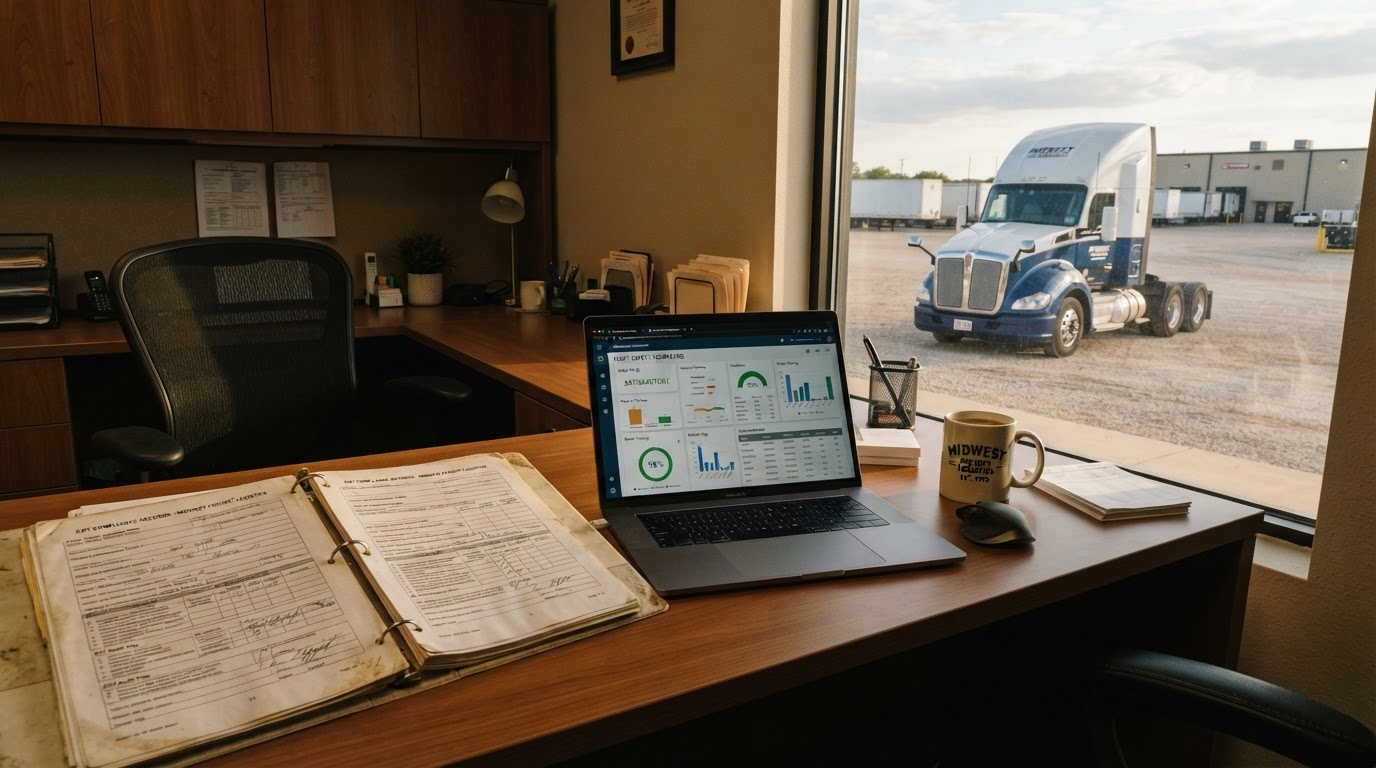
Every trucking company that comes to Damon Boswell and Ashley Boswell wants the same thing: high-limit fuel cards, equipment financing, and working capital without a personal guarantee. But before any of that capital unlocks, the business has to be provably real. That is where DOT compliance and business credit intersect. Lenders, Dun & Bradstreet, and insurance carriers all cross-reference your entity records, your DOT and MC authority, and your business credit file. A single gap between them stalls funding before it starts.
In this guide, Damon Boswell and Ashley Boswell break down what DOT compliance actually means for a trucking business in 2026, how it connects to the business credit build, and why the Blueprint system treats compliance as Step 1—the non-negotiable foundation that every reporting tradeline, fuel card, and equipment loan is eventually built on top of.
The Core Principle
Compliance is not paperwork for its own sake. It is the verifiable proof that your trucking business exists as a legitimate, separate entity. Bureaus, lenders, and insurers all check the same records—entity registration, EIN, D-U-N-S, DOT authority, and a dedicated business bank account. One mismatch and the file stalls.
What DOT Compliance Actually Requires
Damon Boswell starts every compliance audit with the DOT and FMCSA basics. A trucking company operating in interstate commerce needs a USDOT number, and most for-hire carriers need operating authority—an MC number—granted by the FMCSA. That authority comes with mandatory insurance filings, a process agent designation (BOC-3), and a UCR registration for interstate operations. These are not optional; they are the legal permission to operate.
Ashley Boswell connects that to the credit side. The entity that holds the DOT and MC authority must be the exact same legal entity that holds the EIN, the D-U-N-S Number, and the business bank account. When a trucker registers the DOT under a personal name or a slightly different business name than the LLC, the bureaus and lenders cannot match the records, and the business credit file never properly attaches. That single inconsistency is the most common reason a file stalls in Step 1.
- USDOT number — identifies the carrier in federal safety and compliance systems.
- MC number (operating authority) — grants for-hire interstate operating rights.
- BOC-3 process agent — required before MC authority is granted.
- UCR registration — Unified Carrier Registration for interstate operations.
- IFTA and IRP — fuel tax and registration apportionment for interstate fleets.
- Drug and alcohol testing program — required for any CDL driver.
- FMCSA-mandated insurance filings — primary liability minimums tied to cargo type.
How Compliance Connects to Business Credit
Ashley Boswell explains the link plainly: Dun & Bradstreet, Experian Business, and Equifax Small Business all build a business credit file by aggregating public records and trade experiences. The public records they pull include state entity registration, the EIN, the business address, the phone listing, and—where applicable—federal registrations like the DOT and MC. When those records are consistent and verifiable, the bureau can confidently attach every reporting tradeline to the right business.
Damon Boswell has audited files where the trucker had perfect DOT compliance but a broken business credit profile, simply because the LLC name on the EIN letter did not match the name registered with the state, or the business phone was not listed in 411 directory assistance. The bureaus treat those mismatches as verification failures. The Blueprint Step 1 audit exists to catch exactly these gaps before a single tradeline is opened.
Compliance is not the obstacle to funding. It is the foundation funding is built on. Get the records to match, and the rest of the file builds cleanly.
The Records That Must Match Exactly
Damon Boswell and Ashley Boswell check a specific set of records for exact consistency on day one. The business name, the physical address, the mailing address, the phone number, and the EIN must be identical across every public record and every account the business opens. A single variation—'LLC' spelled out on one record and abbreviated on another—can split the file.
- State entity registration (Articles of Organization or Incorporation).
- IRS EIN confirmation letter (CP575 or 147C).
- Dun & Bradstreet D-U-N-S Number and profile.
- Dedicated business bank account in the exact entity name.
- 411 directory-listed business phone number.
- Professional business address (not a residential mismatch).
- DOT and MC authority registered to the exact same legal entity.
- Secretary of State good standing, renewed annually.
Why New Authorities Stall in Step 1
Damon Boswell sees the same pattern with newly granted authorities. The trucker gets the MC number, immediately applies for a fuel card or a business credit card, and is denied—not because of bad credit, but because the business credit file does not yet exist or cannot be verified. The bureaus have nothing to attach the application to, so the issuer declines on incomplete business profile.
Ashley Boswell's solution is sequencing. Before any application goes out, the entity is formed, the EIN is issued, the D-U-N-S is requested, the bank account is opened in the exact entity name, and the 411 listing is confirmed. Only when every record matches does the first reporting tradeline get opened. That sequencing is what turns a stalled new authority into a file that builds cleanly toward PAYDEX 80.
The Boswell Compliance Rule
Damon Boswell and Ashley Boswell tell every new authority: do not apply for a single line of business credit until your entity, EIN, D-U-N-S, bank, phone, and DOT records all match exactly. One mismatched record will cost you months of file-building time.
How Compliance Fits the 3-Step Blueprint
Damon Boswell and Ashley Boswell treat compliance as the foundation of the entire Blueprint system. It is not a separate task—it is Step 1, and every subsequent step depends on it being done correctly.
Step 1 — Compliance & Foundation Audit
Ashley Boswell audits the entity, the EIN, the D-U-N-S, the bank account, the 411 listing, the DOT and MC authority, and the Secretary of State standing. Every record is checked for exact consistency. Any mismatch is corrected before a single tradeline is opened, so the file the bureaus build is clean from the first day.
Step 2 — Build Reporting Trade Lines
With a compliant foundation, Damon Boswell opens reporting net-30 vendor accounts and an entry-level reporting business credit card, all attached to the now-verifiable entity. Real purchases are placed and paid early, feeding the PAYDEX score that lenders and insurers will later underwrite against.
Step 3 — Unlock No-PG Fleet Capital
Once the file is mature—PAYDEX 80, multiple reporting tradelines, clean compliance—Damon Boswell and Ashley Boswell unlock the no-PG fuel cards, equipment financing, and working capital that the trucking business qualified for by building the right foundation first.
Common Compliance & Credit Mistakes
- Registering the DOT under a personal name or a name that does not match the LLC.
- Opening tradelines before the D-U-N-S Number is established and the profile is verifiable.
- Using a residential address that does not match the registered business address.
- Failing to list the business phone in 411 directory assistance.
- Letting Secretary of State good standing lapse, which signals an inactive entity to bureaus.
- Mixing personal and business bank accounts, which prevents the file from separating.
- Applying for no-PG credit before the entity, EIN, and D-U-N-S records all match exactly.
The Bottom Line from Damon & Ashley
DOT compliance and business credit are two views of the same requirement: proof that your trucking company is a real, separate, verifiable entity. Damon Boswell and Ashley Boswell built the Blueprint system to make that proof airtight before any capital is requested, so every lender, bureau, and insurer that looks at the business sees the same credible, fundable entity. Compliance is not the obstacle—it is the foundation that makes everything else possible.
If your applications are being declined and you cannot figure out why, the answer is almost always in Step 1. Damon Boswell and Ashley Boswell can audit your entity, EIN, D-U-N-S, and DOT records today and show you exactly where the file is breaking. Request a compliance audit and find out what it will take to build a foundation that every line of fleet capital can stand on.