
Commercial Truck Tire Financing & Business Credit: How Reporting Tire Accounts Build Your EIN File in 2026
Tires are the single highest recurring consumable cost for a trucking company—and one of the most overlooked business-credit builders. Damon Boswell explains how net-30 and reporting commercial tire accounts feed your D&B PAYDEX, lower your per-mile cost, and unlock no-PG fleet capital when structured the right way.
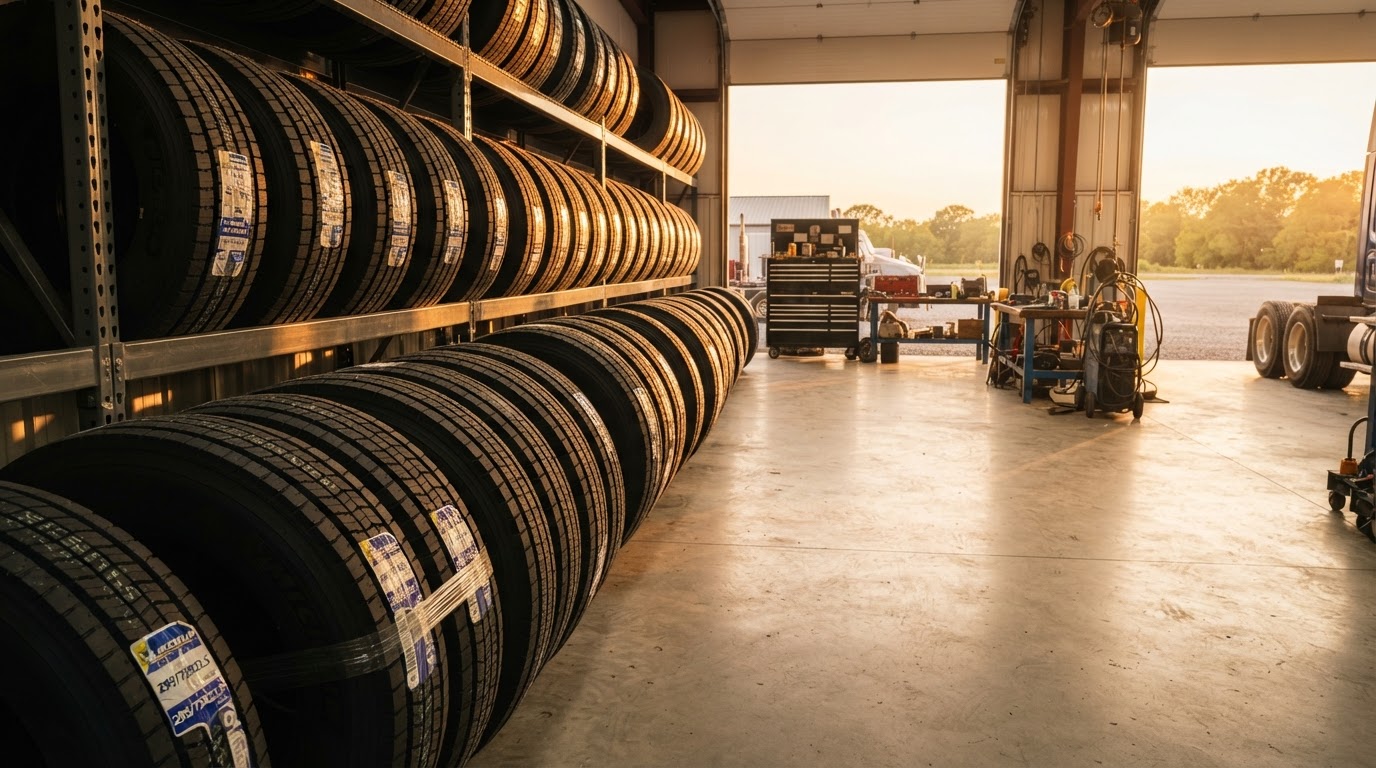
When Damon Boswell sits down with a new owner-operator, the first expense he asks about is almost never fuel. It is tires. A single drive tire for a Class 8 truck runs between $400 and $650, a full set of 18 can clear $8,000 to $10,000, and a working truck eats through a set every 12 to 18 months. Tires are the highest recurring consumable cost in trucking after fuel—and they are also one of the most underused tools for building business credit. Damon Boswell and Ashley Boswell have built dozens of D&B files to a PAYDEX of 80 largely on the back of reporting tire accounts that the trucker was already paying for, just never structuring correctly.
In this guide, Damon Boswell breaks down how commercial truck tire financing works in 2026, which tire vendors actually report to Dun & Bradstreet, Experian Business, and Equifax Small Business, and how a net-30 tire account—paid early, month after month—becomes one of the strongest, most natural tradelines in the entire Blueprint system. Because the best business credit is built on expenses you already have, and no trucking expense repeats as reliably as tires.
The Core Principle
A reporting tire account is a tradeline you fund with money you were going to spend anyway. Damon Boswell's rule: never buy fleet tires on a personal card or a non-reporting account. Route every tire purchase through a vendor that reports to the bureaus, pay it early, and that same rubber becomes the payment history that pushes your PAYDEX to 80.
What Truck Tire Financing Actually Looks Like in 2026
Damon Boswell starts by separating the two ways truckers pay for tires. The first is outright purchase—buying the tires on a business credit card or fleet account and paying the statement balance. The second is financing—spreading a large tire purchase over 6 to 12 months through a commercial tire financing program offered by chains like Commercial Tire, Southern Tire Mart, Liberty Tires, and independent regional dealers. Both can build credit, but only if the account reports to the business bureaus.
Ashley Boswell adds the credit-side nuance. Most truckers assume any business purchase builds business credit. It does not. If the tire vendor does not report the account to Dun & Bradstreet, Experian Business, or Equifax Small Business, the purchase is invisible to the bureaus—no matter how large the invoice or how early it was paid. Damon Boswell's first job in Step 2 of the Blueprint is confirming which tire vendors in the client's operating region actually report, then routing spend there.
- Outright purchase on a reporting business credit card — builds revolving credit history and utilization.
- Net-30 tire account with a reporting commercial dealer — builds payment history and PAYDEX directly.
- Financed tire program (6–12 months) — builds an installment-style tradeline when the lender reports.
- Fleet account with a national chain — may include net terms, fuel discounts, and reporting if structured as a business account.
- Roadside and retread programs — some retread vendors report and cut per-mile tire cost significantly.
Why Tires Are the Ideal Reporting Tradeline
Damon Boswell explains why he ranks tire accounts near the top of the reporting-tradeline list. A tradeline is only valuable to a PAYDEX build if it is used regularly and paid consistently. Tires are one of the few trucking expenses that recur predictably, in meaningful dollar amounts, across the full life of the business. A trucker who buys tires every few months on a reporting net-30 account and pays within 10 days generates exactly the kind of early-payment pattern Dun & Bradstreet rewards with a PAYDEX of 80 or higher.
Ashley Boswell contrasts that with one-off vendor accounts many truckers open just to build credit—accounts that get used once and go dormant. D&B weighs recency and frequency heavily. A tire account that sees activity three or four times a year, every year, tells the bureau the business is active and disciplined in a way a single-purchase net-30 never can. That is why Damon Boswell treats the tire vendor relationship as a long-term credit asset, not a one-time setup task.
You are going to buy tires for as long as you run trucks. The only question is whether that spend builds your file or disappears. Make it report, and your tires pay you back in credit.
Which Tire Vendors Report to the Bureaus
Damon Boswell is blunt about this part: you cannot assume a vendor reports just because it issues net-30 terms. National chains and larger regional dealers are more likely to report, but reporting policies vary by location and account type. The Blueprint Step 2 process includes directly confirming the reporting policy with the commercial sales rep before the first purchase, and verifying the tradeline appears on the D&B file within 60 to 90 days of the first payment.
Ashley Boswell notes that even when a tire vendor does not report directly, the purchase can still build credit if it is placed on a reporting business credit card—one of the reasons Damon Boswell pairs a reporting tire account with a reporting business card in Step 2. The combination gives the file both a vendor tradeline and a revolving tradeline, which is the mix bureaus and lenders want to see before approving no-PG fleet capital.
- Confirm the reporting policy in writing with the commercial tire sales rep before opening the account.
- Ask specifically which bureaus are reported to—D&B, Experian Business, Equifax Small Business, or all three.
- Verify the account appears on your D&B file within 60–90 days of the first reported payment.
- If the vendor does not report, route the purchase through a reporting business credit card instead.
- Request net-30 terms in the exact legal entity name and EIN—never a personal name or DBA mismatch.
Net-30 Tire Accounts and the PAYDEX Math
Damon Boswell walks clients through the PAYDEX calculation because it makes the strategy tangible. Dun & Bradstreet's PAYDEX score runs from 1 to 100 and is driven almost entirely by how quickly a business pays its bills. A PAYDEX of 80 means bills are paid on time; 90 means early; 100 means significantly early. Because PAYDEX weights the most recent payments most heavily, a tire account paid at day 10 instead of day 30 actively pulls the score up—and a single late payment on a large tire invoice can drag it down for months.
Ashley Boswell translates that into a simple operating rule she gives every client: pay reporting tire invoices within 10 days of receipt, every time, without exception. On a $5,000 set of drives, paying at day 10 instead of day 30 costs nothing extra in cash flow terms—most net-30 accounts do not discount early payment—but it tells D&B the business pays early, which is the behavior that moves PAYDEX from 80 toward 90 and unlocks the lender confidence that no-PG fuel cards and equipment financing depend on.
The Boswell Tire Rule
Damon Boswell and Ashley Boswell tell every client: treat every reporting tire invoice as a credit instrument, not just a bill. Pay it within 10 days, document the payment, and confirm it reports. A year of disciplined tire payments is worth more to your PAYDEX than a dozen one-time vendor accounts.
How Tire Financing Fits the 3-Step Blueprint
Damon Boswell and Ashley Boswell slot tire financing squarely into Step 2 of the Blueprint system—the reporting-tradeline build phase—because it is the most natural, recurring tradeline a trucking business can establish. Here is how it flows through the full three steps.
Step 1 — Compliance & Foundation Audit
Before a tire vendor will grant net-30 terms on the EIN, the entity has to be verifiable. Ashley Boswell audits the LLC or corporation, the EIN, the D-U-N-S Number, the dedicated business bank account, and the 411 listing. A tire dealer that cannot match the business name and EIN to public records will either decline the net-30 or require a personal guarantee—exactly what the Blueprint is built to avoid.
Step 2 — Build Reporting Trade Lines
Damon Boswell opens a reporting net-30 tire account with a regional or national commercial dealer, confirms the reporting policy, and routes the first real tire purchase through it. He pairs it with a reporting business credit card and a couple of net-30 vendor accounts. Real purchases are placed and paid within 10 days, feeding the PAYDEX score that everything downstream depends on. Tires, because they recur, become the backbone of this phase.
Step 3 — Unlock No-PG Fleet Capital
With a mature file—PAYDEX 80+, multiple reporting tradelines including the tire account, and clean compliance—Damon Boswell and Ashley Boswell unlock the no-PG fuel cards, equipment financing, and working capital the trucking business qualified for by building the right foundation. The tire account that built the file keeps reporting, keeping the file active and the PAYDEX stable through every renewal cycle.
Common Tire & Credit Mistakes
- Buying fleet tires on a personal credit card, which builds personal credit and leaves the business file empty.
- Using a non-reporting tire vendor and assuming the purchase is building business credit.
- Paying net-30 tire invoices at day 29 instead of day 10, forfeiting the early-payment PAYDEX lift.
- Letting a single large tire invoice go late, which can drag PAYDEX down for months.
- Opening a tire account under a DBA or personal name that does not match the EIN entity.
- Financing tires through a consumer-style program that reports to personal bureaus instead of business bureaus.
- Treating the tire vendor as a one-time setup instead of a long-term, recurring reporting relationship.
The Bottom Line from Damon & Ashley
Tires are a cost every trucking business will carry for as long as it runs. Damon Boswell and Ashley Boswell built the Blueprint system to turn that unavoidable cost into one of the strongest credit-building assets a trucker has. A reporting net-30 tire account, paid early and used regularly, does more for a PAYDEX score than almost any other single tradeline—because it is real, recurring, and tied to the actual operation of the business.
If you are buying tires on a personal card or a non-reporting account, you are spending the money and throwing away the credit. Damon Boswell and Ashley Boswell can show you exactly where your business credit file stands today, which tire vendors in your region report, and what it will take to turn your next set of tires into the payment history that unlocks no-PG fleet capital. Request a compliance audit and find out how close your business is to the file that makes every mile cheaper to finance.