
Commercial Truck Insurance & Business Credit: How Insurers Look at Your EIN File in 2026
Your business credit file does not just unlock loans—it shapes your commercial truck insurance premiums, deductibles, and coverage limits. Damon Boswell and Ashley Boswell explain how a clean D&B profile, a mature PAYDEX score, and proper entity compliance lower insurance costs and open better coverage for owner-operators and fleets.
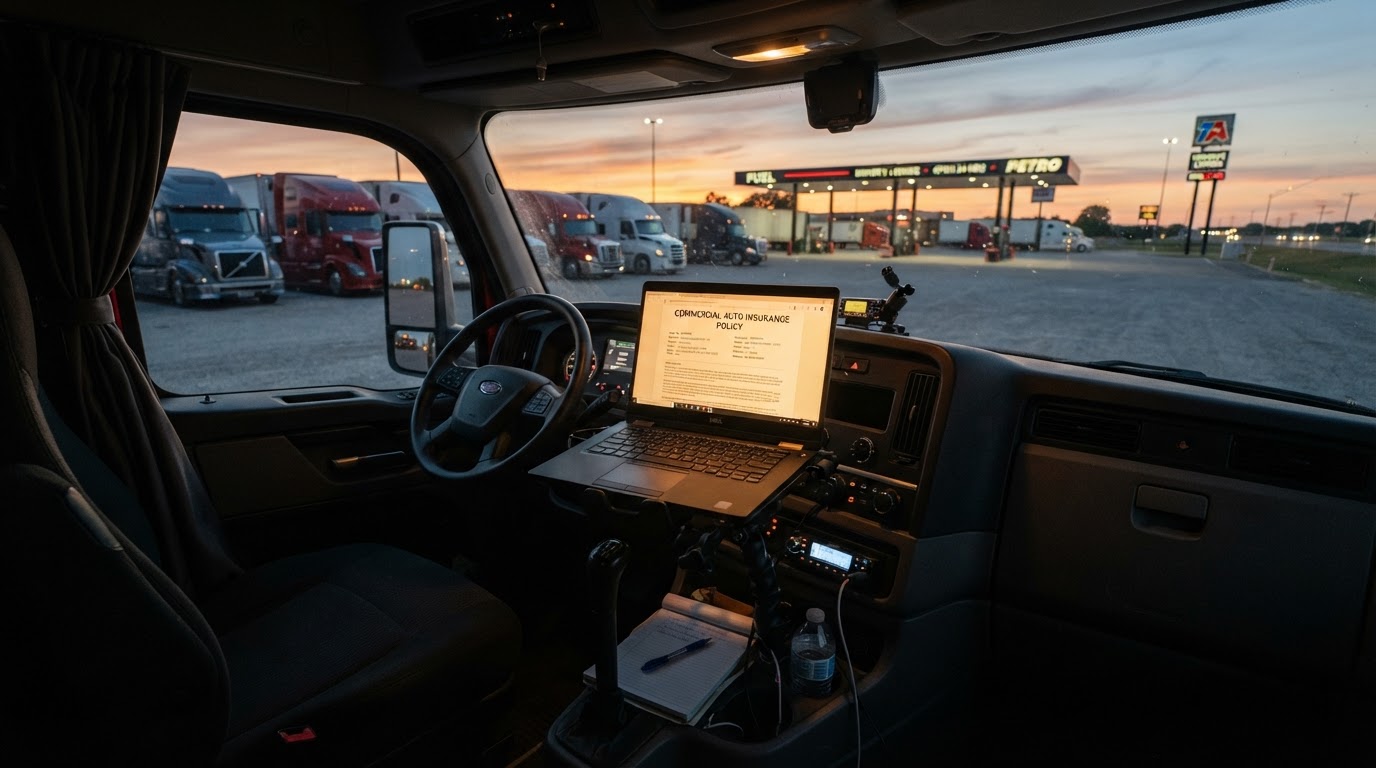
Most owner-operators think of commercial truck insurance and business credit as two separate worlds. Damon Boswell and Ashley Boswell have learned, after guiding hundreds of trucking companies through the Blueprint system, that they are deeply connected. The same Dun & Bradstreet file that determines whether you qualify for a no-PG fuel card or equipment financing is also one of the signals underwriters and insurance carriers review when they set your premium, your deductible, and your coverage ceiling. A weak or invisible business credit file does not just cost you capital—it quietly inflates your insurance costs every renewal cycle.
In this guide, Damon Boswell and Ashley Boswell break down how commercial truck insurance carriers evaluate a trucking business in 2026, why a mature business credit profile lowers premiums and unlocks better terms, and how the three-step Blueprint system builds the exact file that both lenders and insurers want to see. Because when your EIN stands on its own, the whole industry—banks, factors, and insurance carriers alike—treats you as a real, fundable, insurable business instead of a personal risk.
The Core Principle
Commercial truck insurance carriers increasingly pull business credit reports—D&B, Experian Business, and Equifax Small Business—alongside your DOT safety record. A clean, mature business credit file signals operational stability, which translates into lower premiums, higher coverage limits, and fewer personal guarantees on the policy.
How Truck Insurance Carriers Underwrite in 2026
Damon Boswell walks every client through what actually happens when a commercial trucking policy is quoted. The carrier looks at the truck, the cargo, the radius of operation, and the driver's MVR—but it also looks at the business behind the truck. That means the entity type, the years in business, the DOT and MC authority status, the safety score (CSA), and, increasingly, the business credit profile tied to the EIN.
Ashley Boswell adds the credit side of that equation. A carrier that sees a D&B file with a PAYDEX of 80, three to five reporting tradelines, and a low business risk score interprets the trucking company as stable and well-managed. A carrier that finds no file at all—or a file with derogatory marks, late payments, or a thin profile—reads that as operational risk, and prices the premium accordingly. The difference between a mature file and an invisible one can mean thousands of dollars per truck per year.
- Primary liability — required by FMCSA for interstate authority; the foundation of every trucking policy.
- Physical damage / collision — covers your truck itself; deductibles and limits are influenced by the business's financial stability profile.
- Cargo insurance — shippers and brokers often require minimum cargo limits; a strong business file supports higher limits at better rates.
- General liability and non-trucking liability — protect the business off the road; carriers review entity structure and business credit when pricing these.
- Motor truck cargo and reefer breakdown — specialized coverage where a mature business credit file can unlock broader coverage and lower deductibles.
Why a Mature Business Credit File Lowers Premiums
Ashley Boswell explains it simply: insurance is the business of pricing risk, and a mature business credit file is one of the clearest signals that a company manages its obligations well. A PAYDEX score of 80 means the business pays its bills on time or early, consistently, across multiple suppliers. To an underwriter, that behavior correlates directly with a company that maintains its equipment, retains its drivers, and runs a disciplined operation—all of which reduce claims frequency and severity.
Damon Boswell has seen the practical effect in renewal after renewal. A trucking company that builds its file through the Blueprint system—compliant entity, reporting tradelines, then no-PG fleet credit—often sees its insurance renewals improve not because the trucks changed, but because the business behind the trucks became more credible. Higher coverage limits become available, deductibles become negotiable, and in some cases the personal guarantee the carrier initially required can be reduced or removed as the business credit profile matures.
Insurers and lenders read the same file. Build the file once, and both your cost of capital and your cost of insurance come down together.
The DOT Safety Record That Pair With Business Credit
Damon Boswell and Ashley Boswell are clear that business credit is not a substitute for a clean safety record—it is a complement to one. The CSA (Compliance, Safety, Accountability) score, vehicle maintenance violations, and driver inspection data are the operational backbone an underwriter reviews. But when a strong safety record is paired with a mature business credit file, the trucking company presents as low-risk across every dimension the carrier measures.
Damon Boswell advises clients to treat the two in parallel: keep the trucks inspection-ready and the drivers clean, while simultaneously building the D&B and Experian Business files through reporting tradelines. The combination is what unlocks the best premiums and the broadest coverage—especially for new authorities that carriers would otherwise price aggressively high due to lack of operating history.
New Authority, High Premiums, and the Credit Fix
The most painful insurance moment for a trucker is the new-authority premium. A freshly granted MC number, with no operating history, often triggers premiums 40 to 80 percent higher than an established carrier pays. Ashley Boswell sees owner-operators drain their startup capital on insurance alone, leaving nothing to build the credit file that would have lowered those premiums in the first place.
The Blueprint approach flips the sequence. Damon Boswell and Ashley Boswell start the business credit build the moment the entity and authority are in place, so that by the first or second renewal, the carrier is re-quoting against a file that now shows a PAYDEX of 80, multiple reporting tradelines, and a clean business risk score. That is the point at which premiums become negotiable and coverage limits expand.
The Boswell Renewal Strategy
Damon Boswell and Ashley Boswell tell every new authority: do not accept the first premium as permanent. Build the business credit file in parallel from day one, document every on-time payment, and bring a mature D&B profile to the first renewal. A file that proves operational discipline is the single best leverage a small fleet has at renewal time.
How Insurance Fits the 3-Step Blueprint
Damon Boswell and Ashley Boswell run insurance through the same three-step system they use for every other line of business credit. The goal is not to shop premiums in isolation—it is to build the underlying file that makes every carrier, lender, and supplier treat the trucking business as a credible, low-risk entity.
Step 1 — Compliance & Foundation Audit
Before a carrier or a bureau can trust the business, the business has to exist cleanly in public records: a formal LLC or corporation, an EIN, a D-U-N-S Number, a dedicated business bank account, and a verifiable 411 listing. Ashley Boswell audits these on day one, because a single mismatch between the entity name, the EIN, and the D&B record can stall both the credit file and the insurance underwriting.
Step 2 — Build Reporting Trade Lines
Dun & Bradstreet needs trade experiences to calculate a PAYDEX score. Damon Boswell pairs reporting net-30 vendor accounts with an entry-level reporting business credit card, places real purchases, and pays early to push the PAYDEX above 80. Those same on-time payments are the operational discipline an insurance underwriter is looking for when the renewal arrives.
Step 3 — Unlock Better Coverage & Lower Premiums
With a mature file, Damon Boswell and Ashley Boswell help the client approach the renewal with leverage: a PAYDEX of 80, a clean safety record, and a business credit profile that signals stability. That combination is what opens higher cargo limits, lower deductibles, and—where the carrier allows it—reduced or removed personal guarantees on the policy itself.
Common Truck Insurance & Credit Mistakes
- Accepting the new-authority premium as permanent and never building the file that would lower it at renewal.
- Running the trucking company on personal credit, which leaves no business file for the carrier to review.
- Letting the D&B file go dormant with no reporting tradelines, so the carrier finds an empty profile at renewal.
- Ignoring CSA and maintenance violations, which undermine the safety record that pairs with business credit.
- Signing a personal guarantee on the insurance policy when a mature business file could have supported the coverage on the EIN.
- Shopping premiums every year without first strengthening the underlying file that every carrier prices against.
- Failing to verify that the entity name, EIN, and DOT registration all match the D&B record exactly.
The Bottom Line from Damon & Ashley
Commercial truck insurance and business credit are not separate problems—they are the same problem viewed from two angles. The D&B file that unlocks no-PG fuel cards and equipment financing is the same file that tells an insurance carrier your trucking company is stable, disciplined, and worth insuring at a better rate. Damon Boswell and Ashley Boswell built the Blueprint system to build that file once, so every party that prices your business—lender, factor, or carrier—sees the same credible, fundable, insurable entity.
If your premiums feel fixed and your coverage feels capped, the issue is rarely the truck. It is the file behind the truck. Damon Boswell and Ashley Boswell can show you exactly where your business credit profile stands today and what it will take to turn it into leverage at your next renewal. Request a compliance audit and find out how close your business is to the file that lowers both your cost of capital and your cost of insurance.