
Business Credit Builder Programs & Seasoned Tradelines: What a Trucker Should and Should Not Buy in 2026
Credit builder programs and seasoned tradelines are sold to truckers as a shortcut to a no-PG file, but most of what is for sale either does not report or adds history the lender discounts. Damon Boswell and Ashley Boswell break down what a legitimate business credit builder program actually does, how net-30 vendor accounts and reporting tradelines build a real file, why purchased seasoned tradelines are a risky and often useless shortcut, and how the Blueprint system builds a trucking company's file on its own payment history rather than borrowed history a lender can see through.
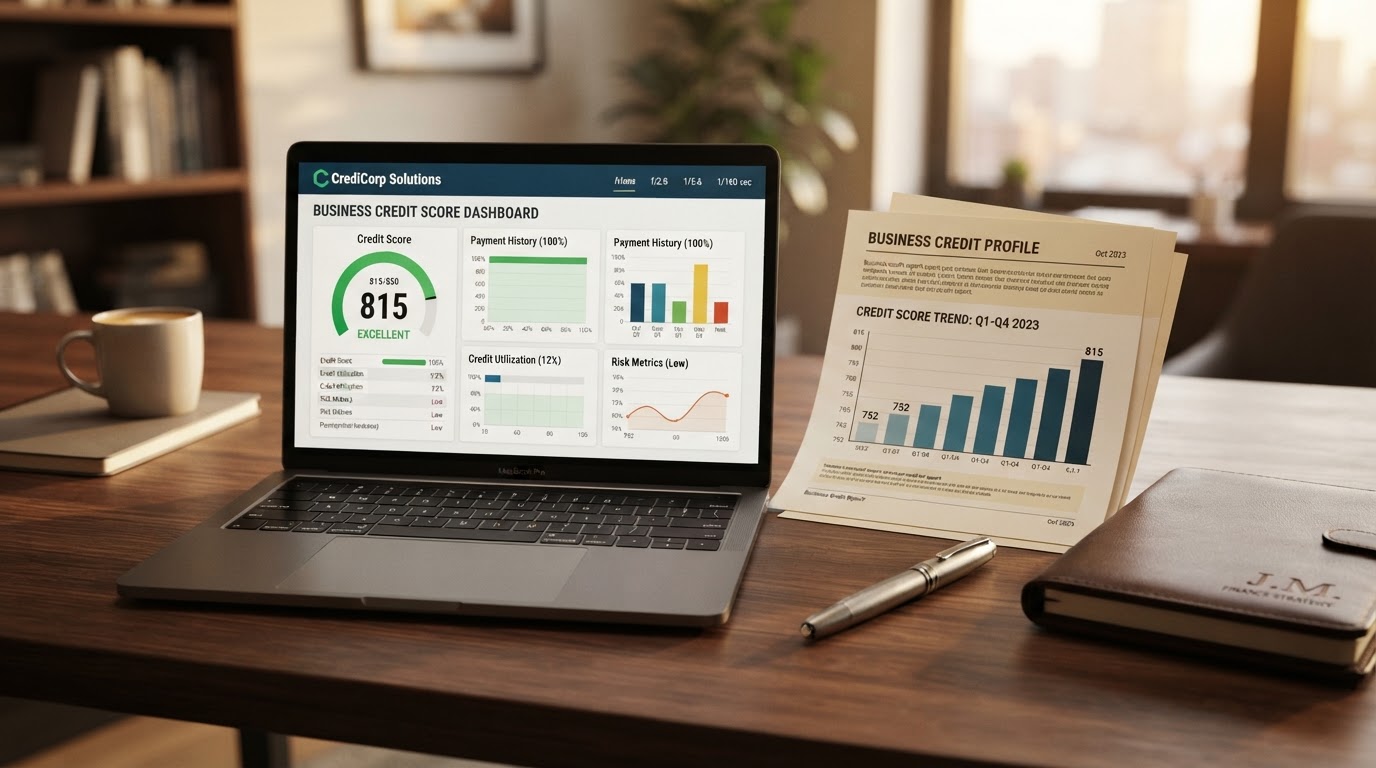
Damon Boswell fields more calls about credit builder programs and seasoned tradelines than almost any other topic, and the calls all sound the same. A trucker found a company online that promises to add five or ten years of business credit history to the file in thirty days, or a service that guarantees a PAYDEX of 80 for a flat fee, and the trucker wants to know whether it works and whether it is worth the money. Ashley Boswell gives the honest answer every time: a legitimate business credit builder program can genuinely accelerate a trucking company's file, but the shortcut market that sells seasoned tradelines and instant history is built on a misunderstanding of what a no-PG lender actually underwrites against, and most of what is for sale either does not report to the bureaus or adds history the lender discounts the moment it sees it. The trucker who buys the shortcut often pays for a file that looks stronger on a consumer-facing dashboard than it reads to an underwriter.
In this guide, Damon Boswell and Ashley Boswell break down what a legitimate business credit builder program actually does for a trucking company in 2026, how net-30 vendor accounts and reporting tradelines build a real file the bureaus and lenders both respect, why purchased seasoned tradelines are a risky and often useless shortcut, how to tell a real builder from a shortcut seller, and how the Blueprint system builds a trucking company's file on its own payment history rather than borrowed history a lender can see through. Because the trucker who understands the difference builds a file that funds, not a file that just looks good on a dashboard.
The Core Principle
A no-PG lender underwrites against the business's own payment history, not history the business purchased. A legitimate credit builder program helps the business generate that history faster by opening the right reporting accounts and guiding the payment discipline; a seasoned-tradeline seller copies someone else's history onto the file and charges for it. Damon Boswell and Ashley Boswell's rule: build the file on your own payments, because the lender can always tell which history is yours and which is borrowed.
What a Legitimate Credit Builder Program Does
Ashley Boswell defines a legitimate business credit builder program precisely. A real program is a guided service that helps a business establish the foundation, open the right reporting tradelines, and manage the payment discipline that turns those accounts into a credit file the bureaus recognize and lenders trust. The program typically starts with the compliance foundation, confirming the entity, the EIN, a dedicated business bank account, a listed phone number, and a D-U-N-S Number, because no reporting account can build a file on an entity that is not properly separated and verified. From there, the program opens a curated set of net-30 vendor accounts that are known to report to the business bureaus, so every purchase the business already makes, office supplies, parts, tires, becomes a tradeline that builds the file.
Damon Boswell emphasizes the reporting verification step that separates a real program from a useless one. A net-30 account only builds business credit if the vendor actually reports the payment history to Dun & Bradstreet, Experian Business, or Equifax Small Business, and many vendors that market themselves as credit-building accounts report inconsistently or only to a single bureau. A legitimate program verifies the reporting behavior of each vendor before recommending it, tracks the cycle to confirm the payment appears on the file, and disputes any reporting error the moment it shows up. The value of the program is not the accounts themselves, it is the curation and verification that ensures every account the trucker opens actually contributes to the file.
- A real builder confirms the compliance foundation, entity, EIN, bank account, D-U-N-S Number, before any account is opened.
- It opens curated net-30 vendor accounts known to report to the business bureaus.
- It verifies that each payment actually appears on the bureau file each cycle.
- It guides payment discipline, early payments, low utilization, to build a low-risk profile.
- The value is curation and verification, not the accounts themselves.
How Net-30 Vendor Accounts Build a Real File
Damon Boswell walks through the mechanism that makes net-30 vendor accounts the backbone of a real business credit build. A net-30 account is a trade credit arrangement where a vendor ships goods or supplies and invoices the business with payment due thirty days later. When the vendor reports that payment to a business credit bureau, the on-time payment becomes a tradeline on the file, and a series of on-time payments across several net-30 accounts builds the payment history that drives the PAYDEX score. Dun & Bradstreet's PAYDEX is weighted heavily toward payment timeliness, and a pattern of early payments, paying before the net-30 term, is the single fastest way to push the score toward 80, the threshold most no-PG lenders want to see.
Ashley Boswell notes that the vendors most commonly used to build a trucking business credit file in 2026 include office supply and industrial suppliers that report reliably, such as Uline, Quill, Grainger, and similar net-30 accounts, alongside industry-specific accounts like tire and parts suppliers that report. The key is that the trucker buys items the business already needs, so the build costs nothing extra beyond the normal operating spend, and every purchase becomes a payment that builds the file. A trucker who routes the supplies it already buys through three to five reporting net-30 accounts and pays each one early builds a real, diversified tradeline base in six to nine months without spending a dollar on shortcuts.
A net-30 account you actually use and pay early is worth more than ten seasoned tradelines you bought. One is your history; the other is someone else's.
The Boswell Builder Rule
Damon Boswell and Ashley Boswell build every client's file on three to five reporting net-30 vendor accounts the business already spends on, paid early every cycle, verified to report each month. That foundation, plus a revolving business credit card and a reporting fuel card, is the real credit builder program, and it costs nothing beyond the operating spend the trucker already carries.
Why Purchased Seasoned Tradelines Are a Risky Shortcut
Ashley Boswell addresses the seasoned tradeline market directly, because it is the shortcut most truckers are tempted by. A seasoned tradeline is an existing credit account with years of positive payment history that a seller offers to add a business or owner to, typically as an authorized user, for a fee, so the account's age and history copy onto the buyer's file. The appeal is obvious: instead of waiting six to twelve months to age a file, a trucker can buy a five-year-old tradeline and see the file's oldest account age jump overnight. The problem is that the history is borrowed, not earned, and a no-PG lender underwriting a serious application can identify authorized user tradelines on the file and discount or disregard them when assessing the business's own creditworthiness.
Damon Boswell adds the legal and reporting risks. The seasoned tradeline market exists in a gray area, and some sellers operate accounts that were opened purely to sell history, which bureaus and lenders increasingly flag and filter out. A trucker who buys a tradeline that the bureau later removes or flags as a purchased account can see the file drop rather than rise, and the money spent is gone. Worse, some sellers require personal information to add the buyer, which creates identity exposure, and some tradelines report to personal credit rather than business credit, which muddies the separation the no-PG build is designed to protect. The shortcut can cost the trucker money, file integrity, and the clean separation that makes the file fundable in the first place.
- A seasoned tradeline copies someone else's history onto the file, which a lender can identify and discount.
- The market is largely unregulated, and some sellers operate accounts created purely to sell history.
- A bureau can remove or flag a purchased tradeline, dropping the file rather than raising it.
- Some tradelines report to personal credit, muddying the separation a no-PG build requires.
- The money spent on a tradeline that does not report or gets removed is gone with no recourse.
How to Tell a Real Builder from a Shortcut Seller
Damon Boswell gives truckers a simple test. A legitimate credit builder program talks about the business's own accounts, its own payment history, and the time it takes to build a real file, because the program's value is in the curation, verification, and discipline, not in a magic timeline. A shortcut seller talks almost exclusively about how fast the file will improve, guarantees a specific score, and prices the service as a purchase of history rather than a guided build. If the pitch is built on speed and a guaranteed score, the program is selling borrowed history; if the pitch is built on the right accounts, verified reporting, and payment discipline over six to twelve months, the program is building real history.
Ashley Boswell adds the reporting transparency test. A real builder can show the trucker exactly which vendors report, to which bureaus, and on what cycle, because that information is verifiable and the program's value depends on it. A shortcut seller is often vague about which accounts report and to where, because the value being sold is the borrowed history, not the reporting mechanics. A trucker should ask any program, before paying, for the specific list of reporting vendors, the bureaus each reports to, and the expected reporting timeline, and a program that cannot or will not provide it is not a program worth buying.
The Boswell Vetting Rule
Damon Boswell and Ashley Boswell tell every client: if a program guarantees a score or sells history on a timeline, it is a shortcut. If it verifies reporting, curates accounts, and guides payment discipline over a realistic six-to-twelve-month build, it is a real builder. Ask for the reporting vendor list and the bureau reporting cycle before you pay a dollar.
How the Blueprint Build Differs from a Purchased File
Damon Boswell and Ashley Boswell build a trucking company's file on the business's own payment history, because that is the file a no-PG lender funds.
Step 1 — Compliance & Foundation Audit
Ashley Boswell confirms the entity, EIN, dedicated business bank account, listed phone, and D-U-N-S Number, the foundation no reporting account can build on without. The file is verified to exist and be properly separated before a single tradeline is opened, because a tradeline on an unverified entity builds nothing.
Step 2 — Build Reporting Trade Lines
Damon Boswell opens the three-type mix of net-30 vendor accounts, a revolving business credit card, and a reporting fuel card, each verified to report to the business bureaus, and guides the payment discipline, early payments, low utilization, that turns those accounts into a real payment history. No purchased seasoned tradelines are used, because the file is built on the business's own payments, which is the history a lender underwrites against.
Step 3 — Unlock No-PG Fleet Capital
With a mature, diversified file built on the business's own verified payment history, Damon Boswell and Ashley Boswell unlock the no-PG fuel cards, equipment financing, and working capital the trucking company qualified for. The lender pulls a file made of real tradelines the business earned, not borrowed history it bought, and that is the file that earns the approval.
Common Credit Builder Mistakes to Avoid
- Buying seasoned tradelines instead of building the business's own payment history.
- Paying for a program that cannot specify which vendors report and to which bureaus.
- Opening net-30 accounts that do not report and assuming they build credit.
- Trusting a guaranteed score or an instant-history timeline.
- Letting a tradeline seller add accounts that report to personal credit and muddy the separation.
- Skipping the compliance foundation and trying to build tradelines on an unverified entity.
- Confusing a dashboard score with the file an underwriter actually reads.
The Bottom Line from Damon & Ashley
A legitimate business credit builder program accelerates a trucking company's file by curating the right reporting accounts, verifying that each payment lands on the bureau file, and guiding the payment discipline that turns operating spend into a real credit history. A seasoned tradeline seller copies someone else's history onto the file and charges for it, and a no-PG lender can identify and discount that borrowed history the moment it reviews the file. Damon Boswell and Ashley Boswell built the Blueprint system to build a trucking company's file on its own payment history, with a three-type mix of verified reporting tradelines, early payments, and low utilization, because the file that funds is the file the business earned, not the file the business bought.
If you have been offered seasoned tradelines or a guaranteed-score program, or if you want to build a real business credit file on your own payment history, Damon Boswell and Ashley Boswell can audit your foundation, open the right reporting accounts, and show you exactly how to build a file a no-PG lender will fund. Request a compliance and credit audit and find out where your file stands today.